
Side-by-Side Comparison
Must-Have Best Digital Atomic Alarm Clocks for the Modern Home


Open the full side-by-side comparisonSee the full criteria table for all top picks when you need the extra detail.Show detailsHide details
Top 10 Of The Best Must-Have Best Digital Atomic Alarm Clocks for the Modern Home

Sharp Atomic Digital Alarm Clock, Battery Operated Self-Setting Digital Wall or Desk Clock, Easy to Read...
Overview
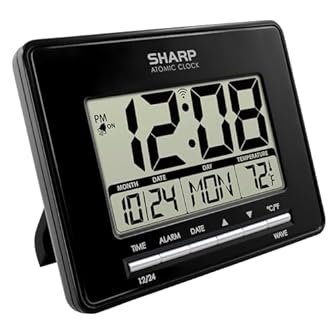
Sharp's SPC5028AMZ is a cordless atomic clock for a wall, desk, shelf, or bedside table. Its 6.45-by-5-inch LCD combines WWVB-controlled time with the date, weekday, indoor temperature, and an alarm, keeping the main calendar cues on one compact screen.
Key Features
- A switch controls the low-glow nightlight, which is intended for dark rooms.
- Daily WWVB reception updates the time, while the calendar shows the weekday and date.
- Three AAA batteries power the clock; the product details say they are not included.
Considerations
The nightlight is specifically described as invisible in a well-lit room, so it is not a daytime backlight. Confirm that WWVB reception is dependable at the intended location. There is no outdoor sensor or humidity reading described, making this a poor match for buyers who want weather data.
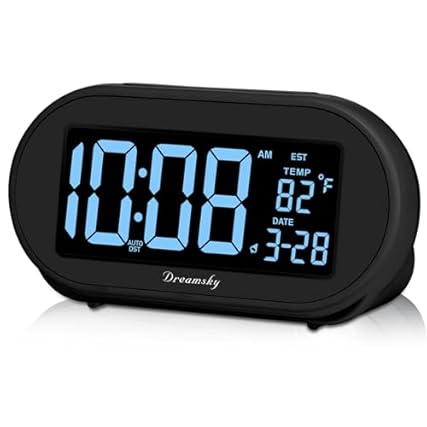
DreamSky Alarm Clocks for Bedrooms, Auto Set Digital Desk Clock for Bedside Nightstand, Electric Clock with...
Overview
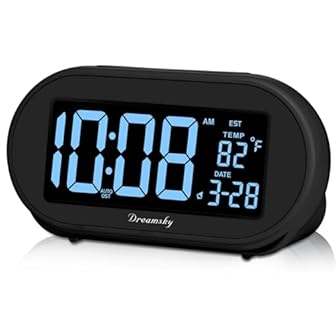
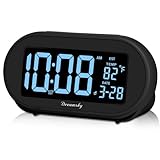
This 4.3-inch DreamSky is a plug-in autoset alarm clock rather than a clearly identified WWVB receiver. It displays blue digits, date, and temperature, offers continuous dimming from zero to full brightness, and lets the owner select Eastern, Central, Mountain, or Pacific time.
Key Features
- The ascending alarm has an eight-minute snooze interval for repeated wake-up calls.
- An included button cell retains time, date, and alarm settings during a power interruption.
- The included DC adapter powers the clock, and a second USB port charges a device.
Considerations
Backup power does not light the display or sound the alarm, so an outage can still defeat the wake-up function. Choose this model for preset autoset convenience and a wide dimmer, not for verified radio synchronization. Check whether four supported time zones cover the installation location.
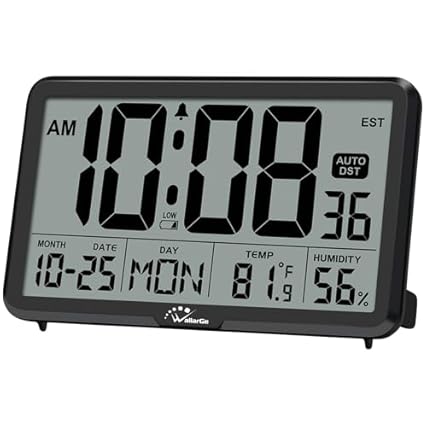
WallarGe Auto Set Digital Wall Clock Battery Operated, Desk Clocks with Temperature, Humidity and Date,...
Overview
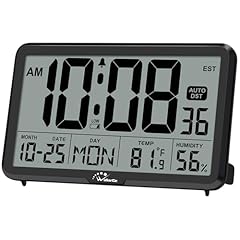
WallarGe's CL6002 is explicitly described as non-atomic even though it sets its stored time automatically after three AA batteries are installed. The 8.6-by-5.2-inch screen shows time, date, indoor temperature, and humidity, with wall, desktop, and tabletop placement options.
Key Features
- Eight selectable time zones and a DST on-off setting support regional time changes.
- The alarm includes an eight-minute snooze, plus selectable 12- or 24-hour time.
- Three AA batteries are required and not included; the screen has no backlight.
Considerations
Do not order this clock when daily WWVB synchronization is the reason for buying an atomic model. Its lack of a backlight also matters in a dark bedroom. Product details mention a separate memory battery despite normal AA operation; confirm how that memory system works before depending on it.

BALDR Atomic Clocks for Bedrooms Digital Large Display - Black - Desk Clock with Temperature Indoor and...
Overview
This BALDR color clock uses North American WWVB updates and displays time, date, weekday, indoor temperature, humidity, and moon phase. It can stand on a desk or hang on a wall, and its adjustable brightness and quiet digital operation fit rooms where screen light and sound matter.
Key Features
- Radio updates occur around midnight or early morning and include automatic DST changes.
- The large color screen groups calendar, climate, and lunar information in one view.
- Backup power preserves settings when household power is interrupted.
Considerations
The normal power supply, backup-battery type, and included power parts are not identified. Although one sentence uses indoor-outdoor wording, the described screen data names only indoor temperature and humidity, with no remote sensor established. Confirm those points before choosing it for outdoor readings or outage operation.
Also featured in: Best Atomic Digital Wall Desk Clocks, Best Electric Atomic Alarm Clocks, Best Atomic Digital Alarm Clocks For Night Stand, Best Moon Phase Atomic Wall Clocks, Best Moon Phase Digital Wall Clocks, Best Phase Alarm Clocks, Best Lorell Atomic Desk Clocks, Best Acurite Atomic Desk Clocks

DreamSky Alarm Clocks for Bedrooms with Battery Backup, Auto Set Digital Clock with Date and Day of Week,...
Overview
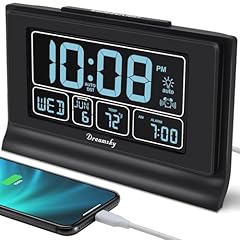
DreamSky's five-inch autoset clock supplies time, date, weekday, and temperature on a plug-in LCD. Six manual brightness levels and automatic dimming suit a bedside screen, while seven US zones plus Newfoundland extend location coverage beyond the smaller DreamSky model.
Key Features
- The clock supports 12- or 24-hour time and automatic DST when that setting is enabled.
- An ascending alarm repeats after an eight-minute press of the snooze control.
- USB power runs the display, and another USB port is available for device charging.
Considerations
The power description names an installed button cell and also three AAA backup batteries, so confirm the actual backup arrangement. Those cells retain settings rather than replace normal plug-in use. WWVB radio reception is not stated; buyers needing true atomic synchronization should select a model that names the radio signal.
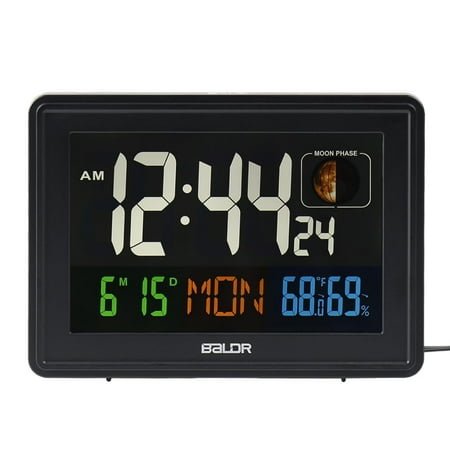
BALDR Atomic Alarm Clock in Color - Digital Clock with Large Display - Calendar & Moon Phase - Indoor...
Overview
BALDR's color atomic alarm clock receives WWVB in North America and combines large time digits with date, weekday, indoor temperature, humidity, and moon phase. An AC adapter supplies normal power, while a built-in CR2032 cell preserves time and alarm settings during an interruption.
Key Features
- Backlight choices are full, half, three-percent, and off for different bedroom conditions.
- The snooze button postpones the alarm for five minutes before it sounds again.
- Automatic calendar and DST updates follow a successful North American WWVB reception cycle.
Considerations
During signal searches the screen can dim or go dark and most buttons become inactive for as long as seven minutes. Confirm that this temporary behavior is acceptable at bedtime. The backup cell stores settings; the details do not promise an illuminated display or alarm operation during an outage.

Digital Alarm Clock for Bedroom Dimmable Dual Desk Clock for Heavy Sleepers
Atomic Clock Large Display, Digital Wall Clock with Indoor Outdoor Temperature and Date, Wireless Outdoor...
LFF Atomic Clock, Digital Wall Clock with Indoor & Outdoor Temperature, Date, Time, Alarm Clock. Atomic...
Overview
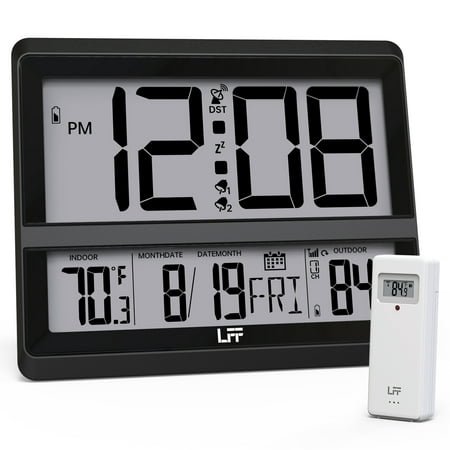
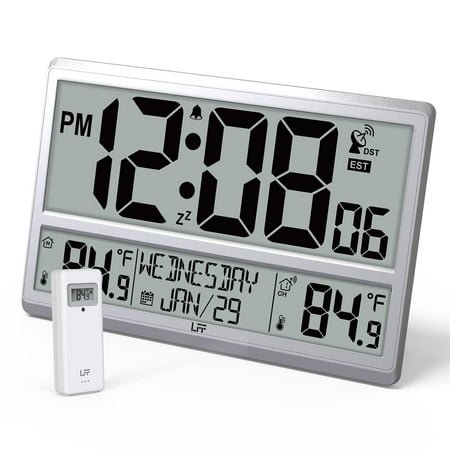
The LFF atomic wall clock emphasizes viewing distance: its case measures 14.2 by 9.4 by 1.1 inches and the time digits reach 4.5 inches. Alongside WWVB-controlled time, it displays date plus indoor and outdoor temperature from an included wireless sensor.
Key Features
- The sensor is described for transmission within 328 feet of the main display.
- Automatic DST can be switched on or off to match the user's location.
- The package identifies the clock, outdoor sensor, and manual, with wall or freestanding use.
Considerations
No normal power method, battery size, or battery inclusion is stated, so settle those details before ordering. The wording calls this an outdoor clock but provides no weather-protection rating for the main display. Use it indoors unless the manufacturer confirms a protected installation is permitted.

Sharp Digital Alarm Clock, 8.9" Extra Large LED Clock with Tilt and Swivel Display, AccuSet Automatically...
Which clocks are truly atomic rather than merely autoset?
A true atomic clock in this group names the WWVB broadcast: the Sharp, both BALDR offers, Warminn, Geevon, LFF, and Zgrmbo do so. The two DreamSky clocks set stored time when plugged in but do not identify a radio receiver. WallarGe goes further and calls the CL6002 non-atomic. That distinction matters when the goal is regular correction from a time signal rather than quick setup after power is connected. Check the supported time zones as well, because successful reception does not fix a clock configured for the wrong zone.
What stays working when normal power disappears?
Treat operating power, setting memory, and an illuminated display as separate functions. Sharp runs from AAA cells, while the DreamSky and BALDR color models normally use an adapter or USB connection. DreamSky explicitly says its button-cell backup will not light the screen or trigger the alarm. BALDR describes its CR2032 as memory for settings. Several sensor models omit battery sizes altogether. Before relying on any clock for waking during an outage, confirm whether backup power maintains only time memory, continues the alarm, or keeps the display visible.
Do you need indoor climate data or a remote outdoor sensor?
Indoor temperature appears on several compact clocks, but that does not mean a transmitter is included. Warminn, Geevon, LFF, and Zgrmbo explicitly describe remote outdoor sensors; their stated links are 328 feet, an unspecified range for Geevon, 328 feet, and 230 feet. Sharp is indoor-temperature only, and the Amazon BALDR text establishes indoor temperature and humidity rather than a remote probe. Plan a protected sensor position, shorten the expected range for walls and floors, and reject an indoor-only clock when outdoor conditions are the real purchase reason.
Which display and alarm behavior belongs at the bedside?
Brightness controls differ more than the screen photos suggest. DreamSky offers broad dimming, BALDR provides four brightness choices, Zgrmbo reacts to ambient light, and Sharp uses a low nightlight that disappears in a bright room. Snooze intervals also vary: five minutes on BALDR and Geevon, eight minutes on DreamSky, with other clocks leaving the interval unclear. Signal searches can temporarily darken BALDR or Geevon displays. Match the clock to the darkest acceptable screen, the needed alarm persistence, and whether controls remain usable during overnight synchronization.
Alternatives to Large Display Atomic Digital Alarm Clocks
Best Radio Controlled Lcd Wall Clocks
Best Large Display Atomic Digital Alarm Clocks

Best Atomic Digital Alarm Clocks With Time Projection
Best Red Led Radio Controlled Alarm Clocks