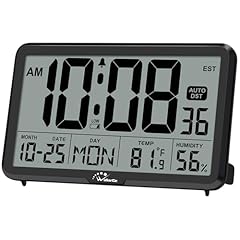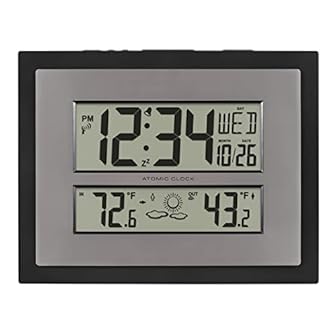
Side-by-Side Comparison
Big Digital Atomic Clocks

Open the full side-by-side comparisonSee the full criteria table for all top picks when you need the extra detail.Show detailsHide details
Top 10 Of The Best Big Digital Atomic Clocks

Sharp Atomic Clock with Bright Color Display, Atomic Accuracy, Jumbo 3" Easy to Read Numbers -...
Overview
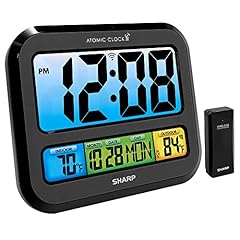
Sharp SPC1107EL combines WWVB radio time with a full-color screen and a wireless outdoor-temperature sensor. Its 8.75-by-7.9-inch case can be viewed on a wall or integrated stand, while three-inch time digits target rooms where a compact conventional LCD is too small.
Key Features
- The receiver synchronizes to the WWVB broadcast and applies radio-controlled time updates.
- An included outdoor sensor is described for placement within 100 feet of the display.
- Outlet power keeps the color backlight on; battery mode lights it for five seconds on demand.
Considerations
Choose the power mode before placing it: always-on color needs household power at 110 or 120 volts, while the clock uses three AA cells and the sensor uses two AAA cells when operated without the cord. Check WWVB reception, sensor range through walls, indoor placement, stand clearance, and whether the color screen remains comfortable at night.
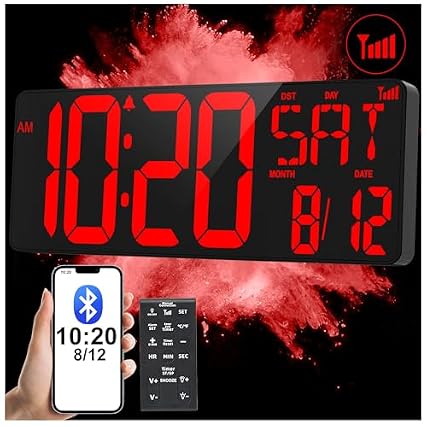
XREXS 17.2" Large Digital Wall Clock Bluetooth Sync Time, Precise Atomic Clocks with Remote Control,...
Overview
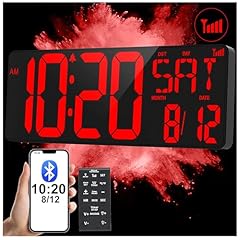
XREXS uses a 17.2-inch red LED display and Bluetooth time matching rather than the WWVB radio reception used by the atomic clocks below. It is a plug-in wall or desk model with a remote, fold-out stand, alarm, indoor temperature, and count-up or countdown modes.
Key Features
- The 17.2-inch LED screen adjusts brightness in response to room light.
- Bluetooth synchronization updates time and date, with three automatic checks described each day.
- Clock, alarm, and timer modes are operated from the case buttons or remote.
Considerations
A nearby outlet is required for the main display. The title calls the clock atomic, but the description supports Bluetooth synchronization, so it is unsuitable when independent WWVB reception is the requirement. Check the four-AAA backup arrangement, remote battery, wall keyholes, cable routing, and actual case dimensions because the listed one-inch case measurements conflict with the 17.2-inch screen.
Also featured in: Atomic Alarm Clocks, Best Atomic Digital Wall Desk Clocks, Best Sync Atomic Clocks, Best Large Led Atomic Wall Clocks, Best Large Atomic Digital Wall Clocks, Best Large Atomic Wall Clocks, Best Internet Digital Wall Clocks, Best Tempus Fugit Grandfather Clocks, Best Atomic Digital Wall Clocks With Temperature, Best Large Atomic Digital Clocks, Best Large Atomic Clocks

WallarGe Atomic Clock with Indoor Temperature and Humidity, 12.5 Inch Self-Setting Digital Wall Clock or...
Overview
WallarGe's battery-only atomic clock displays time, date, weekday, indoor temperature, and humidity without a backlight. The title describes a 12.5-inch format, while the listed case dimensions are 10.6 by 7 inches; a rear support allows desk or wall placement.
Key Features
- Three AA batteries run the display, alarm, calendar, and indoor climate readings.
- Four time zones, 12- or 24-hour display, and optional automatic DST are described.
- Manual setting remains available when the WWVB signal cannot be received reliably.
Considerations
The unlit LCD is a poor match for buyers who need continuous nighttime visibility. Resolve whether 12.5 inches refers to the advertised class or a physical measurement, then check numeral height, rear stand, wall hanger, battery access, and contrast from the intended distance. Radio setup may require a suitable location and time for reception before automatic time is dependable.
Big Deals Atomic Clock With Indoor Temperature And Humidity Self Setting Digital Wall Clock Or Desk Clock...
Overview
The Big Deals listing carries an atomic title, yet its description centers on a compact 3-by-3.4-by-0.5-inch travel clock with a collapsible stand. It shows time, date, and temperature and names alarm and timer functions, but provides little evidence for the headline's self-setting or humidity claims.
Key Features
- The described travel case is lightweight, folding, and sized for a bag or small desk.
- Time, date, temperature, alarm, and timer information appear in the detailed feature text.
- The display has no backlight, and the year must be set before the weekday is correct.
Considerations
Treat this as unresolved until the seller identifies the model and explains whether it receives an atomic signal or measures humidity. The package dimensions of 23 by 14 by 4 centimeters differ sharply from the stated three-inch case. Ask for clock dimensions, battery type, display photos, controls, and synchronization instructions before choosing it as a big atomic clock.

TXL Atomic Clock with Backlight, 14.2" Large Digital Wall Clock Battery Operated, Digital Clock Large...
Overview
TXL's black 14.2-by-5.9-inch atomic clock is a wide battery-operated display for a wall, shelf, or tabletop. It shows time, date, day, and indoor temperature, and adds a light-sensing backlight with two nighttime brightness levels rather than a continuously powered LED panel.
Key Features
- WWVB synchronization and optional DST adjustment handle supported automatic time setting.
- Two rear keyholes and a fold-out stand provide wall and tabletop placement.
- The ambient sensor can activate the backlight after dark or leave it switched off.

Considerations
Battery information conflicts: the description mentions four AA batteries plus two AA batteries, while the product specifications list four AA cells as included. Clarify the quantity and purpose of every cell before relying on the package. Also check backlight duration, sensor behavior, digit height, wall hardware, stand depth, and WWVB reception in the chosen room.

XREXS Large Digital Wall Clock WiFi Sync, 16.5 in Large Display Wall Clock with Temperature/Date/Week, LED...
Also featured in: Best Wifi Digital Wall Clocks, Best Internet Digital Wall Clocks
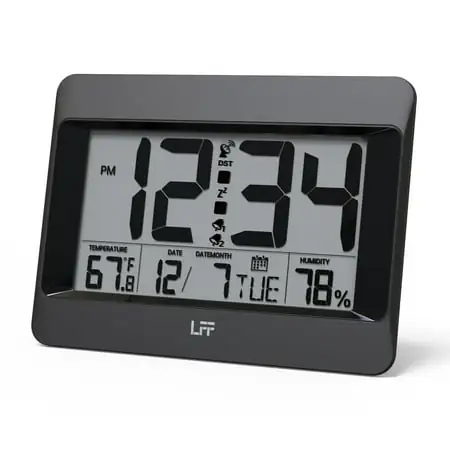
LFF Atomic Clock with Indoor Temperature and Humidity, Auto Set Digital Wall Clock Battery Operated, Desk...
Overview
LFF's indoor-climate atomic clock uses an 8.5-by-6.28-by-1.02-inch ABS case and a 6.5-by-3.54-inch LCD area. It reports time, date, temperature, and humidity and can sit on its fold-out stand or hang on a wall without an outlet.
Key Features
- Two AA batteries power the clock, with a low-battery indicator and no cord required.
- Eight North American time-zone choices accompany WWVB reception and manual setting.
- Two alarms, snooze, DST, and indoor readings from 32 to 122 degrees Fahrenheit are described.
Considerations
No backlight is identified, so assess LCD contrast in both daytime and low light. Check whether the 8.5-inch case and actual digit height meet the viewing-distance need, and verify the rear hanger, stand footprint, battery door, alarm controls, and humidity display. Buildings or locations with weak WWVB reception may require manual time entry.

WallarGe Atomic Clock with Outdoor and Indoor Temperature - 12.5 Inch Self-Setting Digital Clock Large...
Overview
This 12.5-inch WallarGe model adds an included wireless outdoor-temperature sensor to its radio-controlled wall or desk display. The screen presents 2.5-inch time digits, indoor and outdoor temperature, calendar information, seconds, an alarm, and selectable 12- or 24-hour time.
Key Features
- The outdoor sensor is described for a maximum separation of 100 feet from the clock.
- Four United States time zones and automatic DST accompany WWVB synchronization.
- Both the main display and remote sensor operate from batteries rather than an outlet.

Considerations
The description excludes batteries but does not state the type or quantity for either unit. Check those requirements, the sensor's mounting method, obstructions that reduce wireless range, screen backlighting, stand depth, and wall support. The temperature sensor is for remote outdoor readings; the clock itself is not identified as weatherproof and belongs indoors.
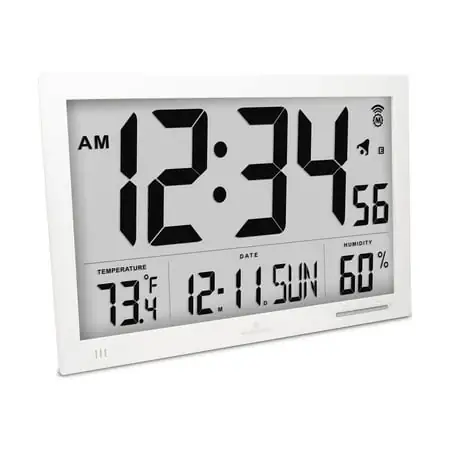
Marathon CL030062WH Slim-Jumbo Atomic Digital Wall Clock White
Overview
Marathon CL030062WH is a slim white atomic display that is one inch thick and uses 4.5-inch digits. It tracks time, date, weekday, indoor temperature, and humidity, and includes an alarm with five-minute snooze for wall, desk, or bedside placement.
Key Features
- Four time-zone selections cover Eastern, Central, Mountain, and Pacific settings.
- The display switches between 12- and 24-hour time and Fahrenheit or Celsius.
- A fold-out stand supports tabletop use, while the case is also wall mountable.
Considerations
The listing does not establish the battery type, battery count, backlight, wall hardware, case width, or case height. Those omissions matter for a bedroom and for a distant wall. Check the actual outer measurements, hanger, stand stability, alarm volume, humidity accuracy instructions, and whether the high-contrast screen can be read in the room's nighttime lighting.
Also featured in: Best Large Radio Controlled Wall Clocks, Best Large Atomic Digital Wall Clocks
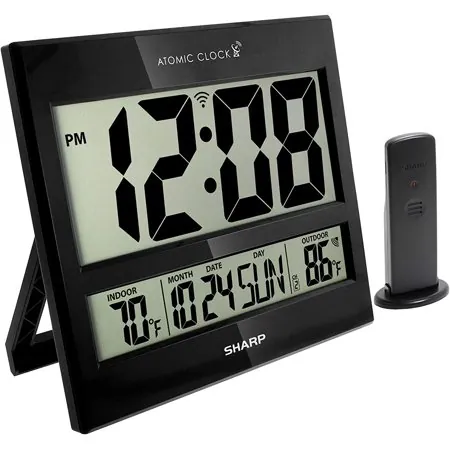
Sharp Atomic Clock - Never Needs Setting! - Jumbo 3" Easy to Read Numbers - Indoor/Outdoor Temperature...
Overview
Sharp SPC1107A is a gloss-black battery atomic clock with an indoor sensor and an included remote outdoor-temperature transmitter. It shows time, day, month, date, and both temperatures, with roughly three-inch digits and a built-in stand for desk or wall use.
Key Features
- WWVB reception supplies radio-controlled time and calendar updates when a signal is available.
- The remote sensor is described for placement within 100 feet of the main unit.
- Three AA batteries power the display, while separate batteries power the outdoor transmitter.
Considerations
The sensor requirement conflicts within the description: one passage says two AA cells and another says two AAA cells. Resolve that before buying batteries. Check for a backlight, the exact 3- versus 3.3-inch digit height, sensor weather-placement guidance, hanger, stand depth, and WWVB reception. Ignore the broad company-sales claims when judging fit or performance.
Which clocks actually use a radio-controlled atomic signal?
Sharp SPC1107EL, both WallarGe models, TXL, LFF, Marathon, and Sharp SPC1107A describe WWVB reception. That radio link can set time without a phone, although walls, electrical interference, geography, and the first reception window can still affect setup. XREXS instead matches time through Bluetooth and therefore does not meet a requirement for independent WWVB synchronization. The compact Big Deals entry is harder to classify because its headline says atomic while its detailed instructions focus on manual year setting. When radio control is the reason for buying, verify the synchronization method first and keep manual setting available as a fallback.
Which power and backlight arrangement works in the intended room?
Sharp SPC1107EL and XREXS need an outlet for their primary always-visible illuminated displays. Sharp can also run from batteries, but its color backlight then appears for five seconds on demand. TXL uses batteries with an ambient-sensor backlight, while WallarGe B0819GZ9KQ explicitly has no backlight. Several other LCD listings never state how the screen behaves after dark. Battery-only placement removes cable routing but adds cell replacement and can limit illumination. For a bedroom, decide whether the display should remain dark, dim automatically, or stay continuously readable; then verify the normal operating supply separately from memory or sensor batteries.
Do you need humidity, outdoor temperature, or only indoor readings?
The indoor-climate WallarGe, the compact LFF, and Marathon focus on indoor temperature and humidity. Sharp SPC1107EL, WallarGe B097T32M4X, the larger LFF outdoor-sensor clock, and Sharp SPC1107A use a separate transmitter for outdoor temperature as well as an indoor reading. Their advertised reaches vary from 100 to 328 feet, but walls and placement can reduce that distance. TXL reports indoor temperature without humidity, and XREXS names indoor temperature only. Match the sensor set to the question you actually need answered, and check remote-sensor mounting, battery requirements, operating range, and exposure guidance before locating it outdoors.
How should display size and contradictory specifications affect the shortlist?
The biggest declared displays are XREXS at 17.2 inches, TXL at 14.2 by 5.9 inches, and LFF at 14.2 by 9.4 inches. Marathon and LFF describe 4.5-inch digits, while the WallarGe outdoor-sensor model uses 2.5-inch time numerals. Those measurements are not interchangeable: case width, screen area, and digit height answer different fit questions. Several listings also conflict internally, including XREXS's one-inch case measurements, TXL's battery counts, the Big Deals travel-size description, and Sharp SPC1107A's sensor cells. Resolve a conflict whenever it changes mounting space, readability, power, or the synchronization method.
Alternatives to Large Led Atomic Wall Clocks
Best Large Led Atomic Wall Clocks