How Do You Stop Hitting Snooze?
To stop hitting snooze, remove the easy repeat. Put the alarm where you must sit up or stand, use one backup alarm only when needed, and decide the first action before going to bed. Repeated snoozing can make waking feel harder because it creates multiple forced awakenings.
The Snooze Fix
| Problem | Fix |
|---|---|
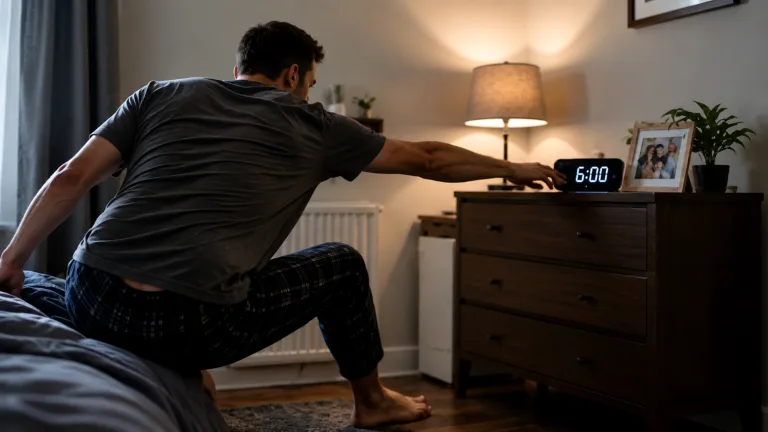
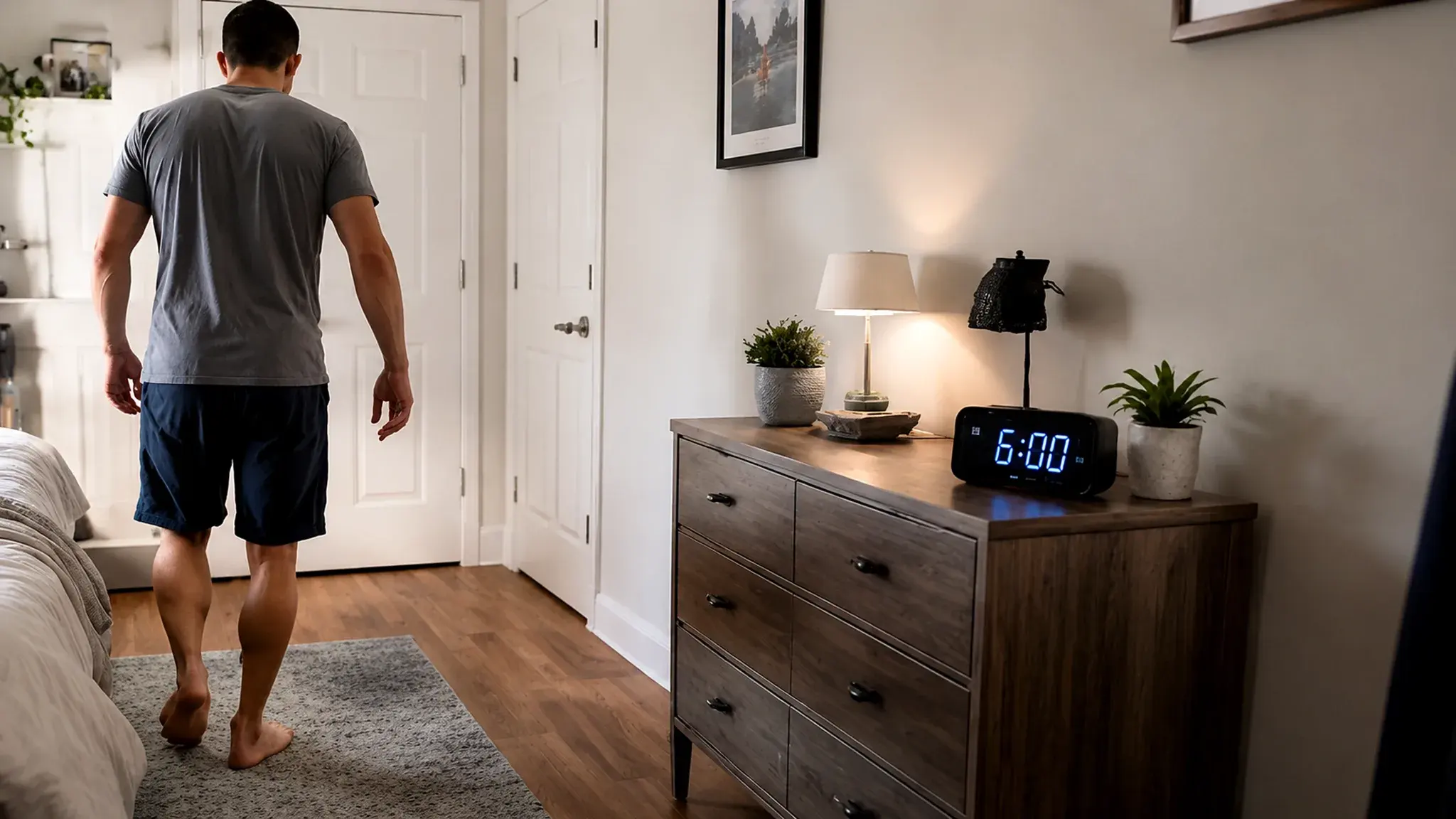
| You hit snooze without thinking | Move the alarm across the room. |
| You turn it off and sleep again | Put a second backup alarm farther away. |
| You wake others | Use vibration first, sound second. |
| You stay up too late | Move bedtime earlier before changing alarm volume. |
| You check the phone in bed | Charge the phone outside arm's reach. |
Use One Main Alarm, Not a Wall of Alarms
Multiple alarms often teach you that the first alarm does not count. Set one main alarm you respect. Use a backup only if being late carries real consequences.
Make the First Action Physical
The first action should happen before your brain starts bargaining. Stand up, turn on light, drink water, walk to the bathroom, or put on shoes. Keep that action simple enough to do half-awake.
What to Change on the Alarm Clock
When Snoozing Is a Symptom
If you cannot wake up even after enough sleep opportunity, or if you feel extreme daytime sleepiness, the issue may not be discipline. It may be sleep debt, schedule mismatch, medication, stress, or a sleep disorder. If severe sleepiness keeps coming back, consider qualified guidance instead of treating it as an alarm problem.
Related Guides


How to Stop Hitting Snooze FAQ
Is hitting snooze bad?
Occasional snooze is not a moral failure, but repeated snoozing can make the wake-up process more fragmented and less reliable.
Should I disable the snooze button?
Yes, if you use it automatically. A clock without an easy snooze button can help when the habit is the problem.
What alarm is best for stopping snooze?
The best alarm is the one that matches your failure mode: loud for deep sleepers, vibration for shared rooms, light for dark mornings, or across-the-room placement for automatic snoozers.