Side-by-Side Comparison
La Crosse Technology Analog Atomic Wall Clocks
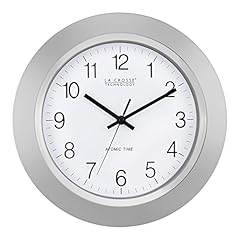
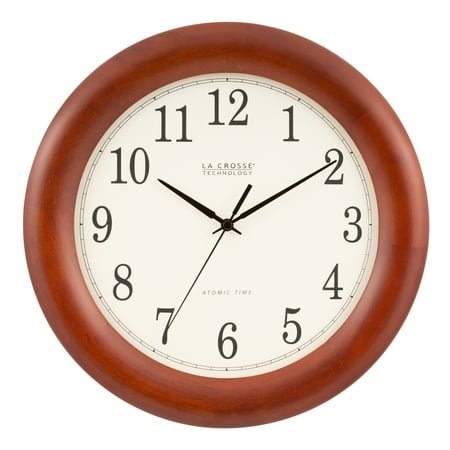
Open the full side-by-side comparisonSee the full criteria table for all top picks when you need the extra detail.Show detailsHide details
Top 10 Of The Best La Crosse Technology Analog Atomic Wall Clocks
La Crosse Technology 12 Inch Atomic Analog Metal Wall Clock, WT-3126B-INT
Overview
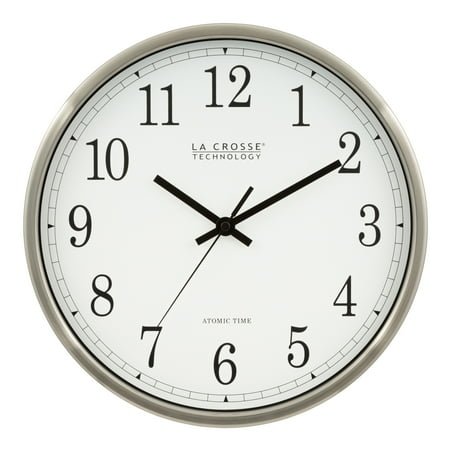
The WT-3126B-INT is a 12-inch atomic analog clock with a stainless-steel frame, white dial, and large black Arabic numerals. Its radio-controlled movement sets the time for a selected US zone and handles the twice-yearly daylight-saving change. A 2.20-inch-deep metal case gives it more wall projection than a slimmer case.
Key Features
- Atomic synchronization supports four US time zones and automatic DST adjustment.
- The 12-inch face uses a white dial, black numbers, and a solid metal frame.
- One AA alkaline cell operates the clock; two optional AA cells can extend battery life.
Considerations
The battery description does not include cells, so plan for up to three alkaline AA batteries if using the optional compartment. Radio reception still depends on location and setup; check the manual-setting fallback and rear hanger before mounting it in a shielded interior area.
La Crosse Technology 404-00237-Int 18" Indoor/Outdoor Atomic Analog Wall Clock, Silver
Overview
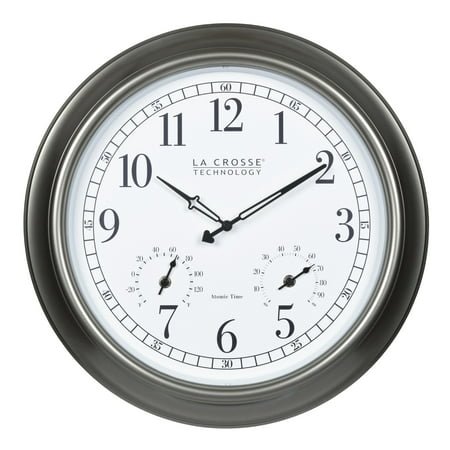
Model 404-00237-INT combines an 18-inch analog atomic clock with a thermometer and hygrometer. The plastic case has a metallic-silver finish, white dial, and black numerals. It receives WWVB time, adjusts for daylight saving, and is described for sheltered indoor or outdoor viewing rather than unrestricted exposure.
Key Features
- The analog scales cover 0°F to 120°F and 1% to 99% relative humidity.
- Its lens is weather sealed against light precipitation and moisture, but not heavy rainfall.
- The clock uses a step-ticking movement and one AA cell, with room for two optional extras.
Considerations
Place it in a dry protected area, away from heavy rain and direct light as the seller recommends. Its movement uses audible step ticking, so it is not a silent-sweep choice. Allow overnight for first WWVB reception or use the manual button if reception is poor.

La Crosse Technology WT-3144S 14 Inch Atomic Analog Silver Wall Clock
Overview
The WT-3144S is a 14-inch silver atomic analog clock intended for indoor use. Its round face is also specified at about 13.45 inches across, so the nominal and detailed sizes differ slightly. It offers automatic radio setting plus a manual option and keeps the layout focused on time rather than extra sensors.
Key Features
- Four US time-zone settings are available, with atomic accuracy stated to the second.
- Daylight-saving updates are automatic and can be switched off when they do not apply.
- The clock uses one AA alkaline battery and is listed for wall mounting indoors.
Considerations
The description says the AA battery is not included, but another specification says it is included; verify the package contents. Material details are also inconsistent, with metal and a plastic-frame label both present. Confirm frame construction, movement sound, and rear hanger if those points affect placement.
La Crosse Technology 12.5-in. Cherry Finish Oak Wood Atomic Analog Wall Clock, WT-3122A
Overview
The WT-3122A pairs atomic timekeeping with a 12.5-inch oak-wood frame in a cherry finish. Large dial numbers are intended for room-distance reading, while radio setting updates the clock for daylight saving. Four time-zone choices allow the same model to be configured for different continental US locations.
Key Features
- A 12.5-inch round wood frame gives this model a warm-toned finish for rooms using wood furnishings.
- Radio-frequency time setting is stated to be accurate to the second once synchronized.
- Automatic daylight-saving correction and four time-zone settings are included.
Considerations
The product description does not state the battery type, whether a cell is included, the clock's depth, lens material, or movement sound. Confirm those basics and the rear mounting hardware before ordering. Atomic operation also requires usable radio reception or a documented manual-setting method.
Also featured in: Best La Crosse Technology Wood Atomic Analog Clocks, Best La Crosse Technology Analog Atomic Frame Clocks, Best La Crosse Oak Atomic Wall Clocks, Best La Crosse Atomic Wall Clocks, Best Crosse Oak Wall Clocks, Best Crosse Arrows Wall Clocks, Best Cherry Wood Atomic Analog Wall Clocks, Best Atomic Wooden Wall Clocks
La Crosse Technology 404-50447-INT 12.8" Atomic Walnut Analog Wall Clock
Overview
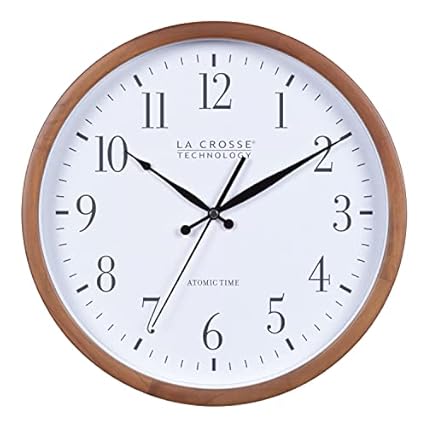
The 404-50447-INT is a 12.8-inch indoor atomic clock with a walnut-colored pine-wood frame and an off-white textured dial. Its four-zone radio-controlled movement sets itself and handles daylight-saving changes. At two pounds, it needs a wall fastener suited to both the clock and the mounting surface.
Key Features
- The round 12.8-inch face combines a pine-wood frame with an off-white textured dial.
- Time-zone options are Pacific, Mountain, Central, and Eastern, with automatic DST correction.
- One AA alkaline battery is required and is explicitly listed as not included.
Considerations
This model is listed for indoor use. Product details do not describe the lens, hand contrast, movement noise, or hanger, so check those points if glare, quiet operation, or mounting access matters. The walnut wording describes the color; the frame material is pine wood.
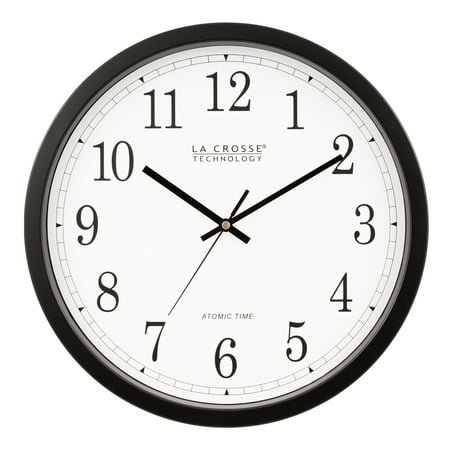
La Crosse Technology WT-3143A 14" Atomic Analog Wall Clock, Black
Overview
The WT-3143A is a 14-inch black atomic analog wall clock with simple one-button zone selection. It receives WWVB time, can update for daylight saving, and also lets that DST behavior be turned off. Its brief description emphasizes automatic setup rather than case materials or decorative details.
Key Features
- Four selectable time zones cover Pacific, Mountain, Central, and Eastern time.
- A one-touch zone button simplifies initial configuration after the battery is installed.
- Operation requires one AA alkaline battery according to the listing.
Considerations
The description does not state whether the battery is included, identify the lens or frame material, describe the movement sound, or list mounting hardware. Verify the WT-3143A package and make sure the intended wall location can receive the radio signal before relying on automatic setting.

La Crosse Technology 12 Inch Atomic Analog Wall Clock, Aluminum (WT-3126B)
Overview
This WT-3126B offer describes a 12-inch aluminum atomic wall clock with a white dial, black Arabic numerals, glass lens, and metal hands. It supports automatic or manual time setting and four continental US zones. The basic one-cell setup can be expanded with two additional AA cells for longer service.
Key Features
- Atomic time covers Pacific, Mountain, Central, and Eastern zones with optional DST updating.
- The seller identifies an aluminum case, glass lens, metal hands, and 12-inch round format.
- One AA alkaline cell operates it; two more can be added, with batteries not included.

Considerations
The optional-cell claim concerns longer operating life, not a separate backup function. Confirm movement sound, rear hanger, battery-door access, and reception at the installation wall. The description gives no measured noise level or package-hardware list, so check both before mounting.

La Crosse Technology 404-54667-INT 10-Inch Atomic Chapter Ring Stainless Steel Analog Clock
Overview
The 404-54667-INT is the most compact analog option here at 10 inches. It uses a brushed black stainless-steel case, silver chapter-ring design, raised bezel numbers, plastic lens, and metal hands. Atomic synchronization and a manual setup path keep its function comparable to the larger La Crosse clocks.
Key Features
- The 10-inch case is stainless steel with raised numerals around a silver chapter ring.
- Four US zones and switchable automatic daylight-saving adjustment are supported.
- One AA alkaline battery powers the clock and is not included.

Considerations
This clock is intended for an indoor wall, but the description does not characterize tick volume or specify the hanger. Raised bezel numbers differ from ordinary printed dial numerals, so inspect the product images for the viewing angle and contrast you need. Reception conditions still govern automatic setting.

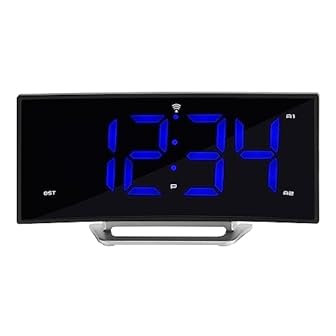
La Crosse Technology 512-85937-INT Atomic Digital Wall Clock with Temperature & Forecast in Gray/Silver
Overview
The 512-85937-INT is a digital result on an analog-clock page. Its rectangular display combines atomic time and full calendar data with a 12-hour forecast, indoor temperature, and wireless outdoor temperature. It can hang on a wall or stand on a surface, making it functionally different from the round clocks around it.
Key Features
- Seven US time zones, 12/24-hour time, selectable DST, and a crescendo alarm are included.
- The TX141v3 sensor covers -40°F to 140°F and adds signal and low-battery indicators.
- The clock and sensor each require two AA batteries, for four total; none are included.

Considerations
Choose this only if a digital calendar-and-weather display fits the requirement; it is not an analog clock. The description does not claim a lit screen, so confirm night readability. Battery-only operation also means checking visibility from the planned wall or tabletop position.

La Crosse Technology Wall Clock, Plastic, 14-inch Dia. (WT-3143A) (WT-3143A-INT)
Overview
This WT-3143A-INT listing describes a 14-inch black plastic atomic wall clock with a white dial and black Arabic numerals. It combines quartz hand movement with radio-controlled setting, allows manual setup, and supports four mainland US zones. The simple case is aimed at clear time display rather than added weather functions.
Key Features
- Automatic setting and optional DST adjustment cover Eastern, Central, Mountain, and Pacific zones.
- A white dial, black numerals, and black plastic case define the 14-inch design.
- One AA alkaline battery is required and is listed as not included.

Considerations
The description does not state a silent or sweep movement, lens material, or included wall fastener. Compare the model suffix and package details with another WT-3143A listing rather than assuming identical contents. Confirm battery access and radio reception at the intended wall before mounting.
Will an atomic wall clock receive the time signal in your room?
These clocks use the WWVB radio signal and still need correct zone selection. Exterior walls and overnight setup can help reception, while dense construction, metal, electronics, and some interior locations may make synchronization less reliable. The 18-inch 404-00237-INT instructions recommend aiming the clock toward Colorado and allowing overnight. Keep a manual-setting route available, choose the correct Pacific, Mountain, Central, or Eastern setting, and disable automatic DST where local rules do not use it. Test reception before drilling a final mounting hole.
Which diameter, frame, and lens suit the wall?
Nominal sizes range from the 10-inch 404-54667-INT to the 18-inch indoor/outdoor model. A smaller face occupies less space but may be harder to read across a large room. Frame descriptions also differ: stainless steel, aluminum, pine wood, oak wood, and plastic are all represented. Lens material is not consistently reported; known examples include glass, plastic, and a weather-sealed outdoor lens. Check complete depth, weight, hand contrast, reflections, hanger position, and a fastener rated for the wall. Leave enough side clearance to reach zone and manual-setting controls.
Are these clocks quiet, and can they be used outdoors?
Atomic describes time synchronization, not movement noise. The 404-00237-INT explicitly uses step ticking, while several other models provide no acoustic description. If the clock will be near a bed or desk, confirm the movement rather than infer silence. Most products are indoor models. The 18-inch clock is weather sealed for light precipitation and moisture, but its seller still recommends a dry protected location away from heavy rain and direct light. No other model should inherit that outdoor claim.
How many batteries are needed, and what do similar model names hide?
Most analog clocks here run on one AA alkaline cell, usually not included. Some WT-3126B and 404-00237 listings provide two optional AA slots to extend operating time, which is different from requiring three cells. The digital 512-85937-INT needs four AA batteries across its clock and sensor. Similar WT-3126B and WT-3143A listings can vary in materials and package wording, so match the complete model suffix and selected package rather than merging specifications from another product page. Retain the carton model number while checking battery fit and reception.
Alternatives to La Crosse Technology Analog Wall Clocks

Best La Crosse Technology Analog Wall Clocks
Best La Crosse Technology Solar Analog Wall Clocks
Best La Crosse Technology Wwvb Chapter Ring Analog Wall Clocks

Best La Crosse Technology 10-Inch Atomic Analog Wall Clocks