- EMOON 3-piece — reliable sweep movement
- Long/short shaft set — budget-friendly
- Kit with hands — value pack
Quick picks
Buyers' fast-track: pick by use-case


Predictors
Technical factors that actually predict a quiet bedroom clock
Continuous‑sweep (brushless or microstep) drives move the second hand smoothly and remove the discrete ‘tick’ pulse. Low-quality steppers or coarse single‑step motors produce audible impulses and vibration.
Shaft length must match the dial and hand stack: too long a shaft or heavy layered hands increase wobble and scraping. Proper clearance above the face prevents periodic contact that becomes a rhythmic noise.
Motors with marginal torque under load strain and make noise; heavy metal hands amplify that. Lightweight, balanced hands (aluminum, hollow brass, or plastic) reduce motor load and smooth rotation.
Resonant cases and rigid mounting transmit motor buzz into the room. Use damped housings, soft grommets or foam pads and choose non‑resonant faces — even simple choices in finishes that don’t amplify noise cut perceived volume.



How kits were tested — practical checks and limitations
Hands-on checks targeted audible tick, vibration and mounting. Tests combined quiet-room listening and in-situ bedroom observation.
- Audible-tick measurement
Short listening sessions at 0.5–2 m with fresh battery and low-voltage simulation; scored for presence, loudness and regularity.
- Vibration & mounting tests
Feel tests on wood, drywall and glass; check gasket isolation and note any sympathetic amplification or resonance.
- Hands, torque and runtime
Verify hand clearance, run torque with heavier hands, and multi-day runtime to catch intermittent ticks or slowdowns.
Small samples and user reports can miss batch variability; treat scores as comparative, not absolute.
Top pick for bedrooms
Versatile 3‑pack for quiet bedroom projects
01 Silent sweep with versatile shaft lengths
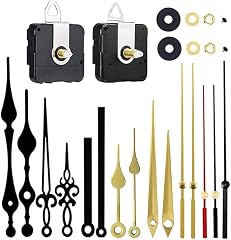
A three‑movement kit that aims squarely at bedroom DIY: silent‑sweep quartz motors paired with seven sets of hands and three shaft lengths to fit thin panels or thicker DIY faces. Suits makers who want one purchase that covers multiple builds—wall clocks, shallow shadowboxes, and bedside table clocks—without hunting different movements. Assembly favors light, balanced hands and a soft mount to keep the sweep truly inaudible.
Key specs
Relevant specifications
- True silent‑sweep motors reduce audible step ticks
- Three shaft lengths cover most DIY panel thicknesses
- Seven hand sets give stylistic flexibility without extra purchases
- Multi‑pack reduces risk of a single DOA part
- Most visible parts are injection‑molded plastic—feel cheap compared with premium movements
- Quality control varies; occasional motor swap may be necessary
- Included hands sometimes need trimming or gentle filing for a perfect fit
Solid choice for bedroom DIY projects. The three shaft lengths and multiple hand styles make this kit a convenient one‑stop option for makers who need versatility. Expect plastic housings and occasional QC quirks; plan to swap units or trim hands if alignment issues appear. With proper hand weight, correct shaft selection, and soft isolation, the sweep movement stays effectively silent in typical bedroom setups.
Select the shortest shaft that still clears the dial to avoid compressing the movement.
Use lightweight, balanced hands; too heavy or off‑center hands increase torque and noise.
Soften the mount with a rubber grommet, foam washer, or silicone feet to decouple vibration from the case.
Don’t overtighten the hand nut—light pressure prevents rubbing and binding.
Test each movement for 24 hours before permanently sealing the clock face.
Budget-friendly option with hands included
Low-cost twin movement kit aimed at hobbyists and repairers who want a functional clock without spending much. Includes two quartz movements and multiple pairs of hands, making it ideal for prototyping, spare-part stash, or quick fixes. Quiet operation is possible, but expects minor tuning and isolation for bedroom use.
- Very affordable entry point for DIY clock projects
- Two complete movements plus multiple hour/minute/second hands
- Simple, common-fit shafts suit most clock faces
- Claimed ‘silent’ quartz action—good baseline for tuning
- Basic plastic/brass parts transmit vibration more than premium units
- Second hands or loose hand-fit can produce audible clicks
- Mounting hardware is minimal—often needs better isolation
- Batteries not included; protective coatings on hands require careful removal
Make it quiet with three practical fixes:
Damp the movement: use a thin rubber gasket or foam silicone pad between movement and case to cut chassis buzz. Control the hands: remove or replace the second hand, tighten its cap nut, or shorten it slightly; balance hour/minute hands so they don’t rub. Isolate the mount: add felt pads or silicone bumpers where the clock meets the wall to stop structure-borne noise.Test on a nightstand before wall-mounting; a fresh AA and snug hand fit often remove most audible artifacts.
Similar kit at a competitive price
Alternative value pack with two silent movements and a variety of hands — ideal for makers who want spares and quick swaps during multiple bedroom-clock builds. The extra minute/hour/second hands remove the wait for exact-size replacements and make prototyping different hand styles fast; however, the included hands are light plastic/aluminum and need trimming, straightening, and a careful fit to stay truly quiet.
- Two complete movements for backups or twin projects
- Multiple hand lengths and second hands for quick matching
- Comes with gaskets, washers, and mounting hardware
- Marketed as ‘silent’—good baseline for bedroom use
- Protective coating must be removed carefully
- Hands can be bent in transit and rub if not aligned
- Light aluminum/plastic hands may still load the motor if oversized
- Batteries not included
Installation checklist
Quiet-install checklist: measure, choose, isolate, clear, balance, test
- 1. Measure the dial and hands first
Record dial thickness, center hole depth and each hand length with a digital caliper or ruler; note any raised numerals or frames that reduce clearance.
- 2. Choose the correct shaft length and movement
Match shaft length to combined dial thickness and spacer stack; select the long or short shaft variant that leaves room for the mounting nut and washers without compressing the movement.
- 3. Isolate the movement from the case
Use a rubber grommet, felt washer or silicone tape between movement and case to cut vibration transfer; avoid over‑tightening the mounting nut which transmits chassis buzz.
- 4. Confirm hand clearance and alignment
Install hands and check rotation at multiple positions — use the hand measurement to prevent contact noise and aim for a small, even gap so hands never touch the dial or each other.
- 5. Match torque to hand mass
If hands are heavy or long, use a higher‑torque quartz movement or swap to lighter hands; excess torque that stalls or strips causes clicking or intermittent ticks.
- 6. Run‑in and listen, then fine‑tune
Let the clock run in its final mounting position for several hours, listen for rubbing or motor strain, and tweak spacer thickness or damping until the noise disappears.
Have these small tools and parts ready before beginning:
Digital caliper or steel rule and a small straightedge Small screwdrivers, needle‑nose pliers, and a 7–10 mm wrench for the mounting nut Rubber grommets, felt washers, silicone tape or soft foam pads for isolation Spare hands (lightweight set), extra movement shafts (long and short), and replacement mounting nuts Small tube of light grease and a low‑strength threadlocker for secure, quiet assemblyTroubleshooting tips
Quick fixes for ticks, rattles, stops and extra-quieting
Why is there still a faint tick after installation?
Most faint ticks come from hands rubbing or a loose cap nut. Check hand clearance, gently re-seat or bend the minute/second hand to avoid contact, snug the cap nut (not overtight), and try a fresh battery to exclude power sag.
What causes rattles or buzzing and how to stop it?
Rattles usually come from a loose mount or case resonance. Isolate the movement with a rubber grommet, foam pad, or felt behind the movement and tighten any loose screws to remove vibration paths.
The clock stops intermittently — what quick diagnostics help?
Start with a fresh, high-quality alkaline battery and test the movement outside the case to rule out frame interference. If stopping persists, check for a dragging hand or overloaded heavy hands and swap to lighter hands or replace the movement.
Want even lower mechanical sound — what else helps?
Remove the second hand or use a sweep (continuous) movement, mount the movement on soft isolation material, and choose lighter hands to reduce torque noise. For advanced builders, consider 3D printed gear options with low noise or minimal, plastic-safe lubrication to tame gear rattle.
When is replacement better than tweaking?
If multiple fixes fail, gears show wear, or performance is inconsistent, replacement is usually more reliable than chasing marginal noises. Swap to a fresh kit that matches shaft length and torque — the three-pack and twin kits reviewed here make sensible replacement options.
Quick glossary
Essential kit terms
- Movement type
Mechanism style: continuous-sweep (near-silent) or stepping (audible tick); choose sweep for bedrooms.
- Shaft length
Distance from movement face to hand hub; match dial thickness to avoid hand rubbing.
- Torque
Available rotational force; heavier or long hands require higher torque to prevent stalls.
- Hand clearance
Gap between hands, dial, and crystal; tight clearance causes contact noise or drag.
Final picks
Final recommendations and pre‑install checklist
- Measure total face thickness and required shaft length; order the matching shaft variant.
- Weigh or estimate hand mass; match to movement torque (heavier hands need stronger torque).
- Confirm hand clearance at all positions; trim or rebalance hands if rubbing occurs in tests.
Top picks: EMOON 3‑piece kit is the top choice for bedroom builds—multiple shaft options and quiet operation make it ideal for building several clocks or keeping spares. The 2‑piece long/short shaft pack is the budget option for single wall clocks with deep faces; add foam isolation and careful hand balancing to reach bedroom‑quiet. The 2‑piece kit with hands is the best value when included hands match the design and eliminate sourcing mismatches.
Before purchase or install, follow the checklist above and consult the article sections on quiet-install checklist, quick fixes, and essential kit terms for step‑by‑step tuning and troubleshooting.
Related Guides: Large Bedroom Wall Clocks

Best Large Bedroom Wall Clocks

Best Bedroom Wall Clocks

Best Unique Bedroom Wall Clocks