
Side-by-Side Comparison
Wall Clock Movement Kits

Open the full side-by-side comparisonSee the full criteria table for all top picks when you need the extra detail.Show detailsHide details
Top 10 Of The Best Wall Clock Movement Kits
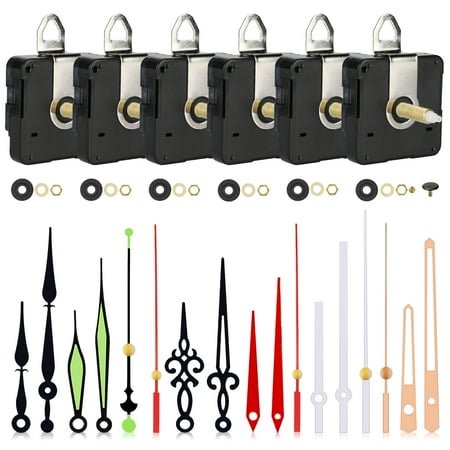
6pairs Hands Quartz Clock Movement Mechanism, EEEkit Battery Operated High Torque Long Shaft Wall Clock...
Overview
EEEkit's Walmart listing pairs a 22 mm total shaft with six hand pairs. It is aimed at a long-shaft wall-clock repair where the buyer also wants several visual hand choices.
Key Features
- The kit pairs one 22 mm long-shaft movement with six hand sets.
- Its seller describes battery power, a high-torque motor, and a sweeping movement.
- The replacement is marketed for wall clock repairs, cross-stitch clocks, and frameless craft projects.
Considerations
The accessible description does not give the threaded-shaft length or a supported panel-thickness range. Those two measurements decide whether the nut can secure the movement, so confirm them before relying on the 22 mm total length.
Also featured in: Q-80 Quartz Clock Movements, Best Large Wall Clocks Hands Kit

High Torque Quartz Clock Movement Mechanism Replacement Kit with Clock Faces and Acrylic Numbers for Craft...
Overview
This PARAOR package is a small clock-building set rather than a motor-only replacement. It includes two movements plus the face, number, hand, and mounting materials needed for two simple craft clocks.
Key Features
- The craft set includes two blank wooden faces and two number-sticker sheets.
- Six hand pairs and nano tape support two complete clock projects.
- Each movement has a 16 mm shaft, 10 mm threaded section, and 8 mm panel fit.
Considerations
That fixed panel specification makes the set less flexible for an unknown existing case. It also contains small parts and carries a choking-hazard warning for children under three, so adult handling and organized parts storage are sensible.
16mm Quartz DIY Wall Clock Motor Kit Movement Mechanism Big Spade Clock Parts Repair Replacement Movement
Overview
This compact generic kit uses a 16 mm total shaft with an 8 mm threaded section. The listing describes one quartz movement, an hour-and-minute hand set, and mounting hardware for a basic replacement.
Key Features
- The kit supplies one quartz movement, one hand set, and mounting hardware.
- Seller instructions call for a 1.5-volt AA battery to power the movement.
- Installation starts with both hands aligned at 12 and the rear positioning pin removed.
Considerations
The battery line in the listing is malformed and the stated measurement tolerance is unusually broad. Treat the 16 mm and 8 mm dimensions as seller data to verify against the delivered part and its instructions.
TSV 2 Pair Hands Quartz Clock Movement Battery Operated DIY Wall Clock Movement Mechanism Clock High Torque...
Overview
TSV's kit is the longest single-shaft option named in this list, with a 31 mm total shaft in the product title. It is intended for a thick clock face or a case with a deeper mounting stack.
Key Features
- The listing identifies a 31 mm long-shaft movement for thicker clock faces.
- Two hand pairs are included for a repair or custom wall clock project.
- Walmart describes the motor as high torque with a quiet sweeping action.
Considerations
Total length alone is not enough to establish fit. The accessible listing does not state the threaded length or maximum panel thickness, so confirm both before choosing this kit for a thick dial.
Also featured in: Q-80 Quartz Clock Movements

TIKROUND 12888 Quartz DIY Wall Clock Movement Mechanism Battery Operated DIY Repair Parts Replacement with...
Overview
TIKROUND lists this 12888 as a single long-spindle movement for repair or a new clock build. Its stated 18.5 mm total shaft and 8 mm threaded section put it between the short and extra-long options on this page.
Key Features
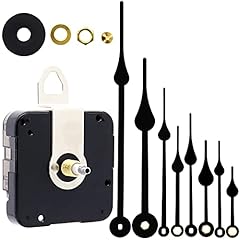
- The package includes one movement, a metal hook, mounting hardware, and instructions.
- Two hour hands and two minute hands provide alternate pairs for the dial.
- The seller specifies a high-torque I-shaft movement for clock panels 4–8 mm thick.
Considerations
Check the old movement's threaded length as well as the panel thickness. The listing mentions hands from 10 to 450 mm, but the mounting style, hand weight, and balance still need to match the replacement motor.

GlamSavvyFZ 2 PCS Silent Clock Movement Mechanism Kit with 2 Sets of Hands – DIY Wall Clock Repair...
Overview
The GlamSavvyFZ set targets thin dials. Each movement is listed with a 13.5 mm total shaft and a 5.5 mm threaded section for a clock panel only 1-3 mm thick.
Key Features
- The package includes two quartz movements and two complete hand sets.
- Each 13.5 mm shaft has a 5.5 mm threaded section for 1–3 mm panels.
- The seller describes a smooth-sweep mechanism for quiet wall clock repairs and lightweight DIY dials.

Considerations
A wood or layered craft face can exceed the narrow 1-3 mm range quickly. Measure every layer around the center hole, and verify that the supplied hand length and mounting holes suit the dial before installation.
Also featured in: Best Quartz Movement Wall Clocks, Best Diy Wall Clocks Kit
Non-Ticking Hands Quartz DIY Wall Clock Movement Mechanism, EEEkit DIY Repair Parts Replacement with 3...
Overview
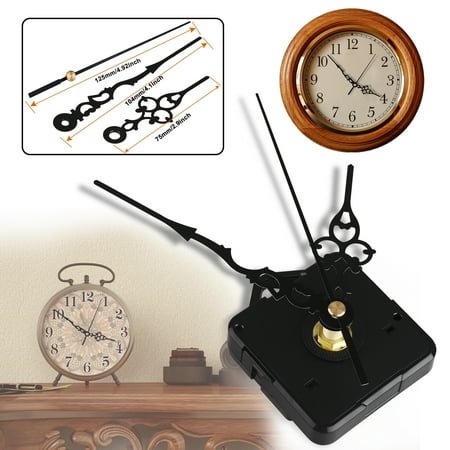
This EEEkit movement is listed for a 1-5 mm panel, using a 15 mm total shaft and an 8 mm threaded section. It suits a thin dial that does not need an extra-long spindle.
Key Features
- The kit uses a plastic movement body with lightweight aluminum hands.
- Its seller describes non-ticking operation powered by one AA battery.
- Three hand styles let a repair change the dial appearance as well as its motor.
Considerations
The battery is not included. Keep the hour and minute hands parallel during installation and avoid force on the aluminum parts; a slight bend can create contact between the hands or against the dial.

2Pcs Quartz Clock Mechanism Kit, Wall Clock Mechanisms Mattery Powered Replacement, Clock Movement Parts...
Overview
The AIRUIFU set covers two common panel depths in one package. Its short movement is listed for 3-6 mm material, while the long movement is listed for 9-13 mm material.
Key Features
- The kit contains two movements, five hour-and-minute pairs, and four second hands.
- Both units are seller-described silent-sweep mechanisms for battery-powered wall clocks.
- Lightweight aluminum hands provide several shapes for repair and craft projects.

Considerations
There is an uncovered gap between the two stated panel-fit ranges, so a dial between them should not be assumed compatible. Measure the complete material stack first and press the thin aluminum hands on without bending them.
Also featured in: Best Battery Quartz Wall Clocks

7pcs High Torque Quartz Clock Movement Mechanism Replacement Clock Kit with 10 Different Pairs of Hands...
Overview
This multi-pack is for several repairs or for a workshop that needs more than one shaft depth. It contains seven movements and ten pairs of hands rather than a single matched motor-and-hand set.
Key Features
- Seven movements cover total shaft lengths of 12, 15.5, and 21.5 mm.
- The shafts have threaded lengths of 6, 8.5, and 15.5 mm.
- Ten hand pairs, seven gaskets, and seven hooks support several repair jobs.

Considerations
The same listing mentions both jump-second movement and sweeping motion, which are different behaviors. Confirm which units are supplied if ticking noise matters, and sort the shafts before beginning multiple repairs.

Quacc 2pcs Silent Quartz Clock Movement Long and Short Shaft with 5 Sets Hands, DIY Wall Clock Mechanism...
Overview
Quacc combines a short and a long movement in one repair pack. The 16 mm shaft is listed for 3-6 mm panels; the 23 mm shaft is listed for panels from 9 to 13 mm.
Key Features
- The package contains two movements, five hour-and-minute pairs, and three second hands.
- A 16 mm shaft serves 3–6 mm panels; the 23 mm shaft serves 9–13 mm panels.
- The seller describes both motors as silent, battery-powered replacements and includes installation instructions.

Considerations
No battery is included. The two stated fit ranges leave an uncovered middle interval, so check the actual dial stack before choosing a shaft. Handle the thin hands at their hubs to avoid bending them.
Which shaft length and panel fit do you need?
The listings on this page are not ten versions of one interchangeable part. Their stated shaft and panel ranges divide them into distinct repair jobs:
- Very thin panels: GlamSavvyFZ states a 1-3 mm range; the 15 mm EEEkit movement states 1-5 mm.
- Short and long pairs: AIRUIFU and Quacc each combine a 16 mm movement for 3-6 mm panels with a 23 mm movement for 9-13 mm panels.
- Mid-depth fit: TIKROUND states a 4-8 mm range. PARAOR lists an 8 mm panel target for its 16 mm craft-kit movements.
- Several repair depths: the seven-movement pack lists separate 12, 15.5, and 21.5 mm shafts for 5, 8, and 14 mm panel targets.
These are seller-stated ranges, not measurements taken by TOPCLOCKS. Klockit's replacement guidance calls for measuring the threaded portion, total hand-shaft length, movement case, and the full thickness of the dial plus its support board. Record those figures before choosing a row above.
Will your old hands fit the replacement movement?
A correct shaft depth does not prove that the original hands will fit. ClockParts notes that hand mounting holes are not standardized. Its I-shaft examples use a round hour-hand hole and an oblong minute-hand hole, but another movement can use a different press-on or threaded arrangement.
Remove the old hands by their hubs, not by pulling on the tips. Photograph the stack first: second hand or cap, minute-hand nut, minute hand, hour hand, dial washer, and movement. Then measure the minute hand from the center mounting hole to its tip. Klockit uses that measurement when sizing replacement hands. A kit with new hands is the safer route when the old hub shape cannot be matched exactly.
In what order should you install and test the movement?
Klockit's assembly instructions place the rubber spacer between the movement and dial, then the brass washer between the dial and hex nut. Tighten the nut only enough to stop the movement rotating in the case; excessive force can mark the dial or distort thin parts.
- Seat the hour hand straight on its shaft at a chosen hour mark.
- Place the minute hand at 12 and secure it with the correct open or closed nut.
- Add the second hand only if the kit and available front clearance support it.
- Check separation between every hand, the dial, and any glass cover before inserting the battery.
- Use the rear setting knob to advance the time and watch a full revolution before closing the case.
If a hand is misaligned, lift it off and reseat it. Twisting a friction-fit hub while it remains pressed onto the shaft can leave the hand pointing between hour marks.
Which listing gaps need a manual check?
Several offers need one more measurement or clarification before they can be matched confidently. The 22 mm EEEkit and 31 mm TSV listings give total shaft length but not the threaded length and supported panel thickness in the accessible descriptions. The seven-movement pack describes both jump-second and sweep behavior. The generic 16 mm listing has malformed battery wording even though it also states a 1.5-volt rating.
Use the product page or seller contact to resolve those gaps. Keep a screenshot or written reply with the order, especially when a repair depends on silence, a thick face, or reuse of original hands. A low price does not compensate for a shaft that cannot secure the dial or hands that do not clear one another.
Alternatives to Wall Clock Movement Kits

Best Brass Quartz Ships Clocks

Best Exton Quartz Table Clocks

Best Fairview Quartz Table Clocks

Best Japanese Quartz Shelf Clocks

Best Japanese Quartz Dark Wood Shelf Clocks
Wall Clock Mechanism Replacement Buyer's Guide: How to Choose the Right Kit
A wall clock repair kit should match the clock body before it matches the style of the hands. The key checks are shaft length, thread length, dial thickness, hand fit, and torque. If one of those measurements is wrong, the clock may run but still look uneven or fail after installation.
Measure Shaft Length and Thread Length
Measure from the back of the movement to the end of the shaft, then check how much of that shaft is threaded for the mounting nut. The thread must pass through the dial far enough to hold the washer and nut without forcing the hands against the clock face.
Match the Hand Style and Shaft Type
Hand compatibility matters because not every replacement clock movement uses the same mounting style. If the old hands are bent, missing, or loose, choose a wall clock mechanism replacement kit with hands included instead of a motor-only part.
Choose Standard Torque or High Torque
Use high torque for large hands, heavy hands, or oversized clock faces. A standard quartz movement can work in a large case only when the hands are light and short enough for the motor.
Check What Parts Come in the Kit
Most wall clock repair kits include a quartz movement, washer, hex nut, rubber gasket, second hand or cap, and one or more hand sets. Check the product photos before buying because some listings include only the motor.
Pick Silent Sweep or Step Movement
Silent sweep movement is best for bedrooms, offices, and quiet kitchens. Step movement is fine for utility rooms, workshops, or anyone who prefers a traditional tick.
For complete clocks rather than repair parts, compare wall clocks. For quartz-based designs, see quartz movement wall clocks. For oversized repairs, review large wall clock movements and large wall clock hands kits. For build projects, compare DIY wall clock kits.