Side-by-Side Comparison
Mini Travel Alarm Clocks


Open the full side-by-side comparisonSee the full criteria table for all top picks when you need the extra detail.Show detailsHide details
Top 10 Of The Best Mini Travel Alarm Clocks

Digital Travel Alarm Clock - No Bells, No Whistles, Simple Basic Operation, Loud Alarm, Snooze, Small and...
Overview
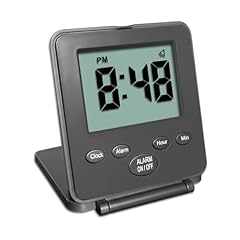
Travelwey focuses on basic digital travel use with a clear display, loud alarm, snooze, brief night light, and a dedicated transport switch.
Key Features
- The rectangular body measures 2.76 inches wide by 3.15 inches high and weighs 0.04 pounds.
- A button lights the display for 5 seconds without adding calendar, temperature, or timer menus.
- The travel on/off slider disables the display and light while retaining the time setting.
Considerations
Two AAA batteries are required and not included. Confirm that a single alarm and simple snooze meet the schedule; buyers who need a continuously lit screen or travel calendar should choose another format.

Betus Digital Travel Alarm Clock – Foldable Calendar, Temperature & Timer with Snooze – Large Number...
Overview
The black Betus folding LCD clock combines time, date, temperature, alarm, timer, and snooze in a thin travel-ready body with an integrated stand.
Key Features
- Folded dimensions are 3 by 3.4 by 0.5 inches for packing in a bag or purse.
- Large digits share the display with calendar and temperature information.
- Setup requires entering the year before the clock can assign the correct day.
Considerations
This version has no backlight, so the LCD depends on room light after dark. Before purchase, confirm the battery type and inclusion, timer controls, temperature units, and whether the folding cover stays stable at the preferred viewing angle.

Betus Digital Travel Alarm Clock - Foldable Calendar Temperature Timer LCD Clock with Snooze Mode - Large...
Overview
This Betus listing provides two silver folding digital travel clocks, each showing time, date, and temperature while adding an alarm, timer, and snooze.
Key Features
- Each folded clock measures 3 by 3.4 by 0.5 inches.
- The collapsible case becomes a stable stand and protects a large-number LCD during transport.
- Correct weekday display depends on setting the year before completing the calendar setup.
Considerations
Neither clock has a backlight. The structured fields conflict with the digital description by naming mechanical and automatic operation, so verify the actual battery type, included quantity, LCD controls, and two-piece package before ordering.
Small Mini Digital Alarm Clock for Travel with LED Time or Temperature Display Snooze, Adjustable...
VOCOO Digital Travel Alarm Clock with LCD Display, Battery Operated, Folding Desk Clock - Black
Overview
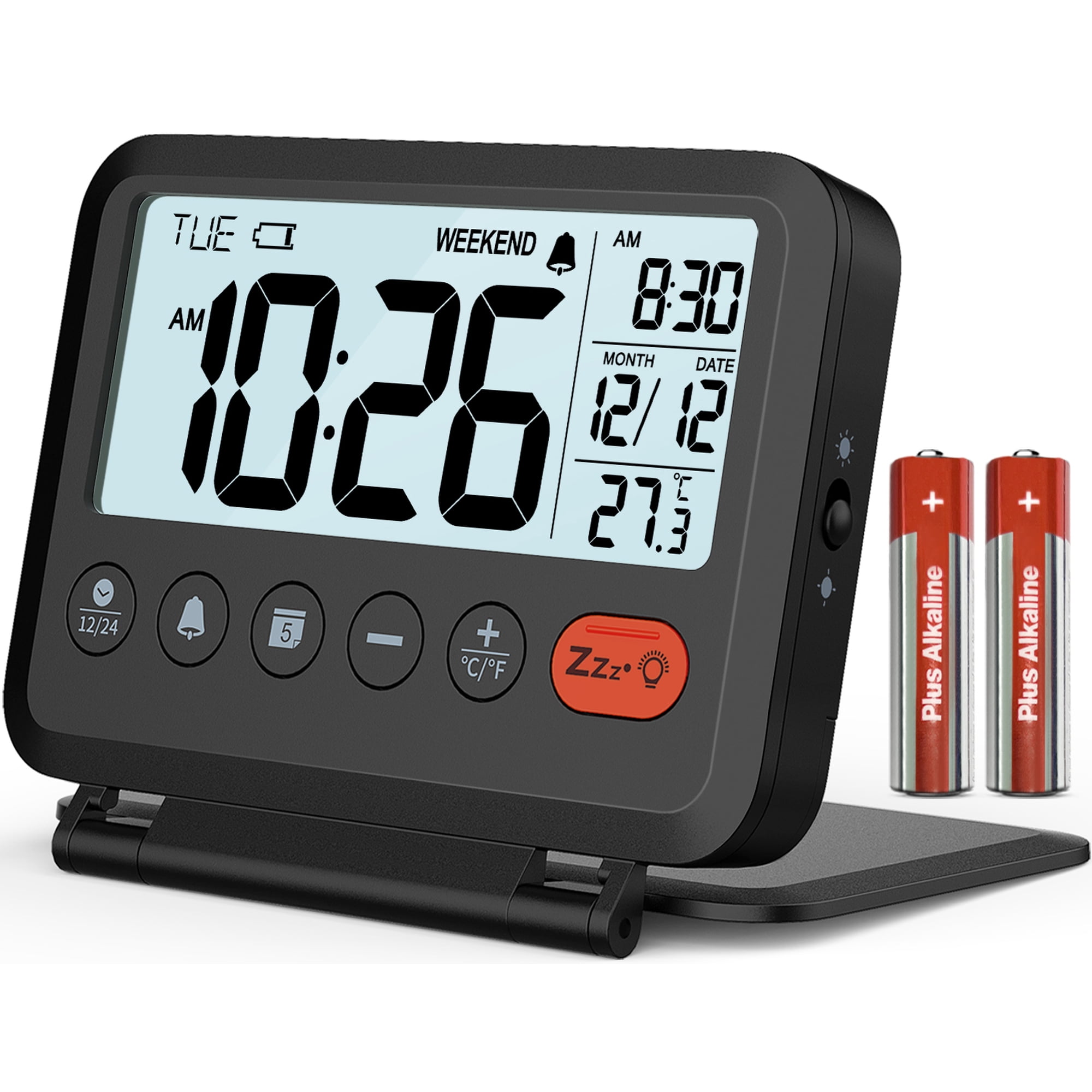
The black VOCOO is a folding battery-powered LCD travel clock that presents time, date, day, temperature, and alarm information in one display.
Key Features
- A 9-minute snooze and two alarm-volume levels add useful wake-up control.
- Weekend mode changes scheduling without requiring the alarm to be reset each week.
- Adjustable display brightness and included AAA batteries support immediate bedside use.
Considerations
The record does not state case dimensions, battery count, alarm count, temperature units, or whether illumination is continuous. Before purchase, confirm those details and check that the folding hinge holds the screen at a readable angle.
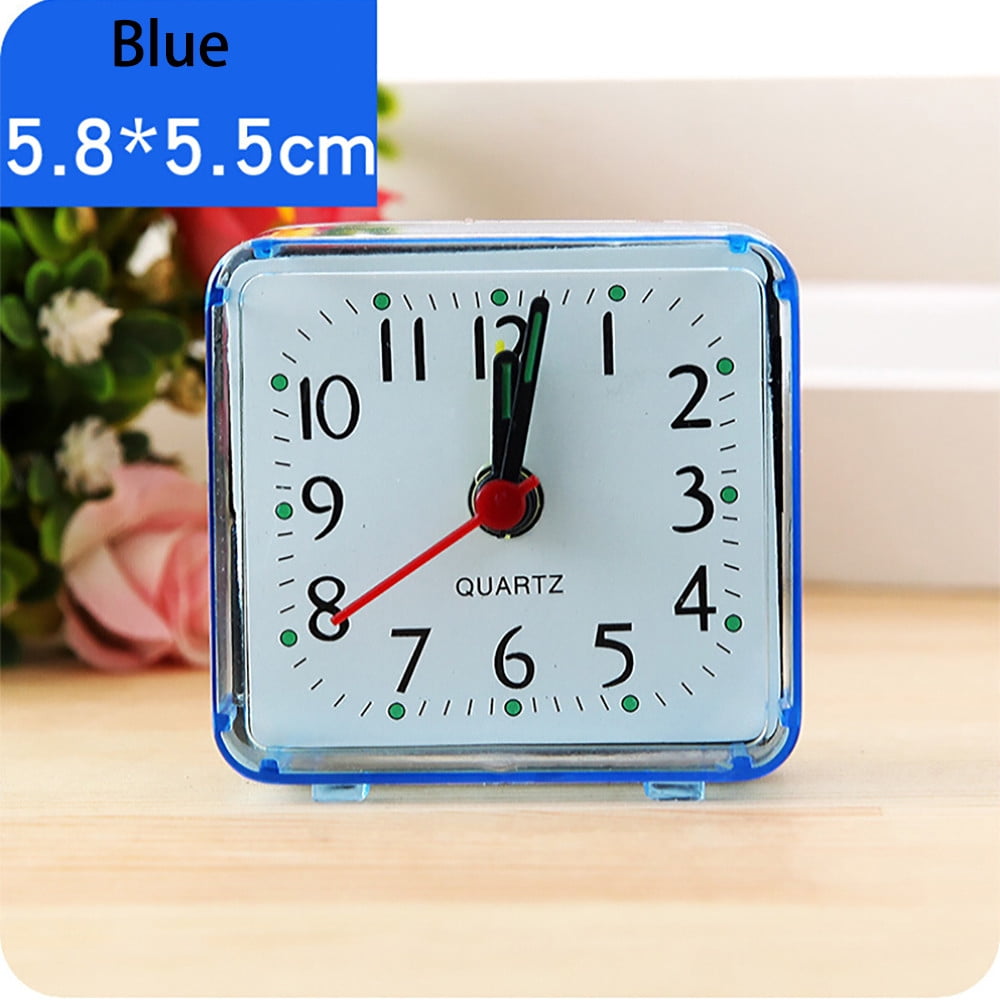
Small Battery Operated Analog Alarm Clock, Travel Clock,Slient Bedside Clocks for Bedrooms Bathroom Shelf...
Overview
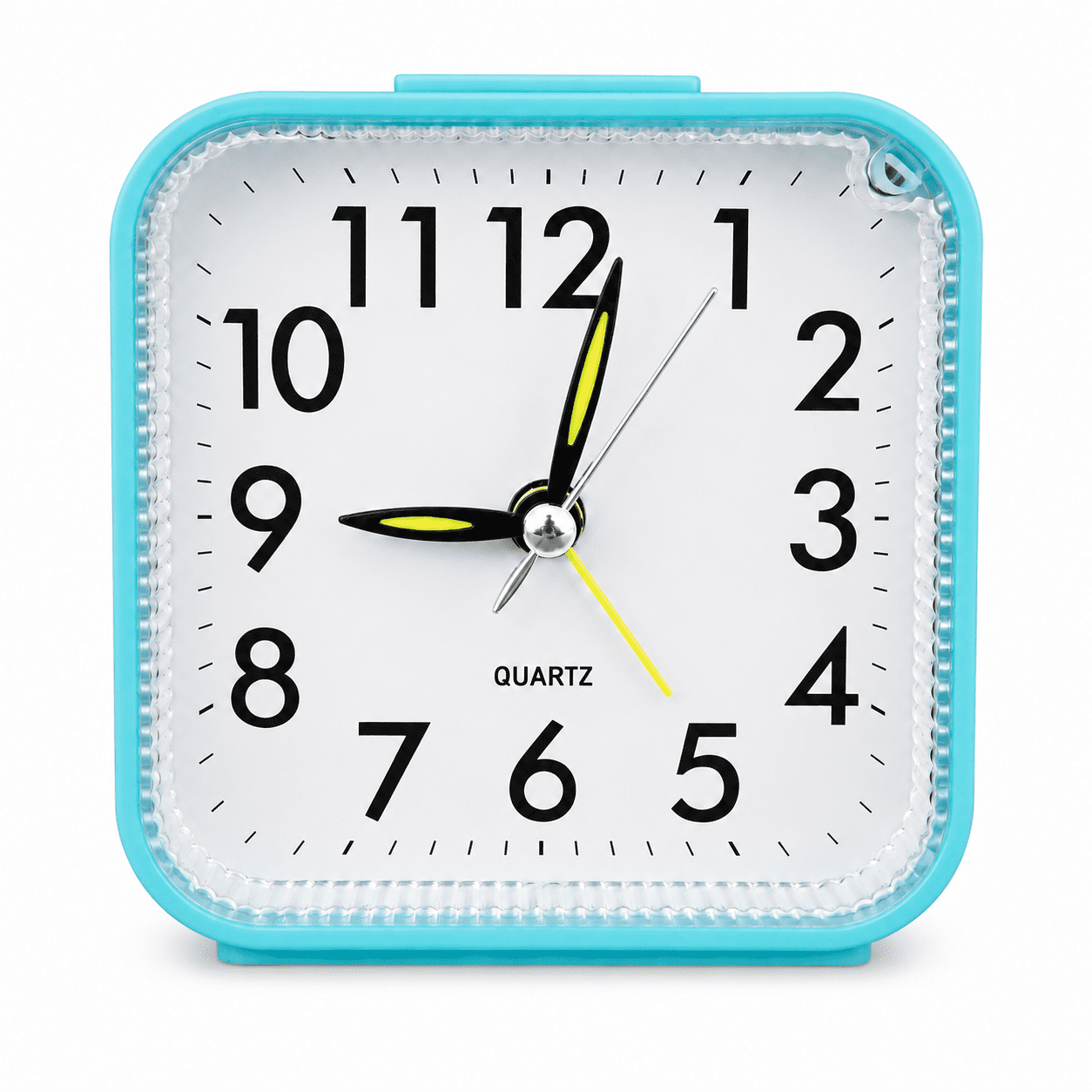
This blue analog alarm clock is designed for compact bedside, bathroom, shelf, or desk placement, with cordless operation, silent movement, and a press-on night light.
Key Features
- One AA battery powers the clock without a cord or nearby outlet.
- The movement is described as silent, avoiding a ticking sound during sleep.
- A top control activates the night light for reading the dial in darkness.
Considerations
The source supplies no measurements, battery-inclusion statement, snooze function, or alarm-volume behavior. Before ordering, confirm the blue case size and whether the light remains on only while the button is pressed.
SHARP Digital Alarm Clock, Black, LCD Display, Battery Operated, Small, Travel Clock
Overview
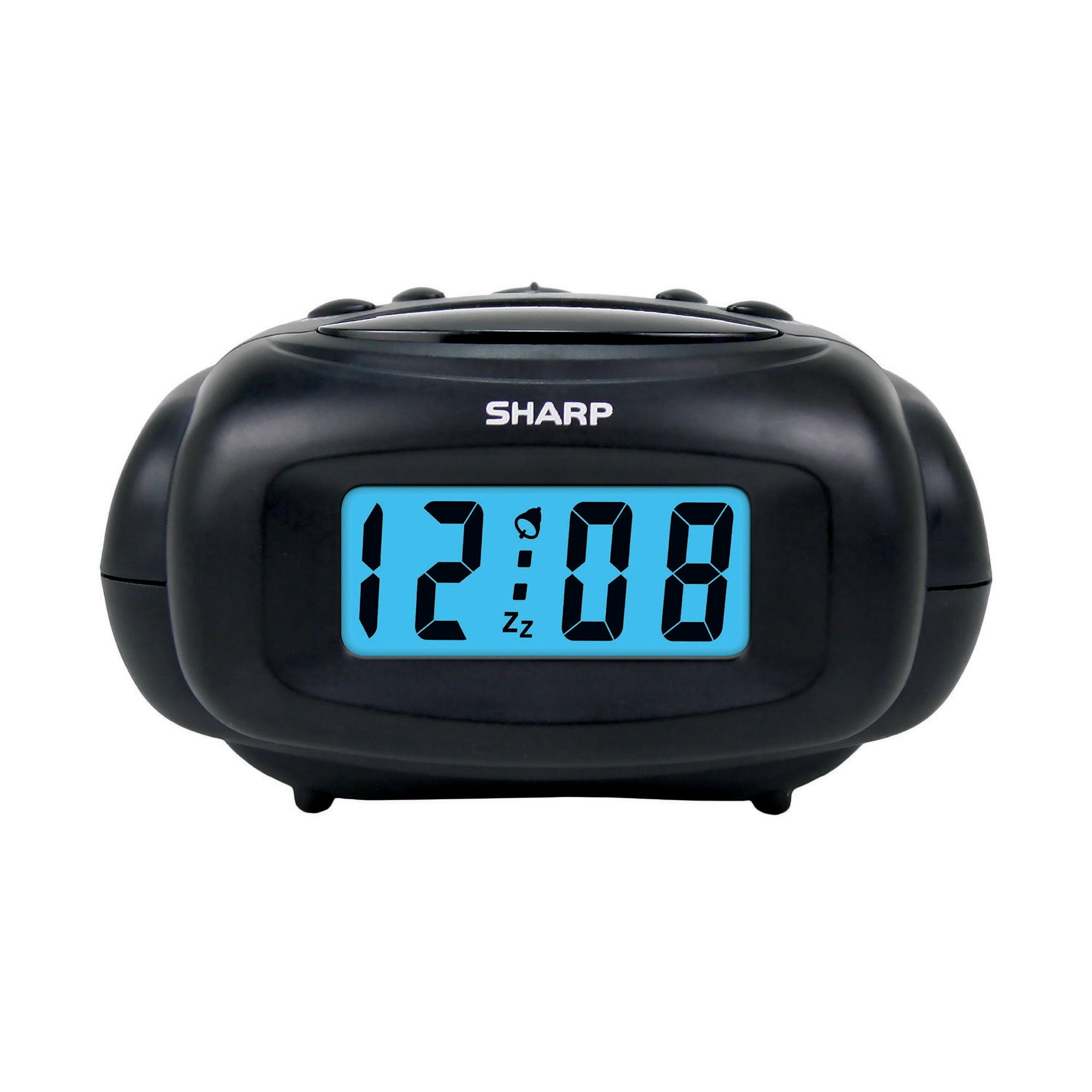
The black SHARP is a simple battery-operated LCD travel alarm clock with an ascending wake sound, snooze control, and backlight for low-light checks.
Key Features
- The alarm increases in volume instead of beginning at its loudest level.
- A snooze button postpones the wake signal for additional rest.
- The backlit LCD can be read when a hotel room or bedroom is dark.
Considerations
The record omits dimensions, weight, battery type, cell count, inclusion, snooze duration, and alarm-volume range. Do not order until those basic travel and operating details are confirmed for the linked black version.
Ultra Mini Battery Analog Travel Alarm Clock, 2.3 x 2.2Inch Small & Compact Retro Silent Bedside Table...

Braun Classic Travel Analogue Alarm Clock with Snooze and Light, Compact Size, Quiet Quartz Movement,...

AYRELY® Small Metal Alarm Clock, Desk and Table Clock for Travel
Which travel clock is easiest to pack and read?
Folding Betus clocks are only 0.5 inches thick and protect their LCD while packed; the black Travelwey body is 2.76 by 3.15 inches and exceptionally light. The miniature mirror clock is smaller still, although it needs USB power. Noamus supplies six 2-inch twin-bell clocks, so its package quantity matters more than an individual clock's footprint. Digital displays can combine calendar and temperature information, while analog models offer direct hands and knobs. Check whether the hinge forms a stable stand, whether the face remains readable at bedside distance, and whether rear controls can be used without unfolding or lifting the clock.
How should power and setup be planned for a trip?
Travelwey needs two AAA cells, and the blue analog model uses one AA. Each Noamus clock arrives with an AG13 cell behind a removable insulator tab. VOCOO says AAA batteries are included but does not state the count. The mirror clock is different: USB supplies normal operation, while its 2032 button cell stores memory. Confirm battery inclusion for every other model and carry the correct spare size. Set calendar-based clocks at home because Betus requires the year before weekday calculation. Test the alarm-off and snooze buttons, pack folding units closed, and avoid assuming a memory battery will illuminate a screen during an outage.
Which alarm or nighttime feature could be a deal-breaker?
Noamus is explicitly non-silent despite its quartz movement, and the 3-inch metal twin-bell clock uses a loud bell alarm; either may disturb a shared room. That metal model's luminous dial fades after roughly 2 to 3 hours, though a button backlight remains available. Betus provides calendar, temperature, timer, and snooze but no backlight. VOCOO adds weekend mode and two volume levels. SHARP uses an ascending alarm, while Travelwey removes calendar and timer complexity. Eliminate any model that lacks the required continuous illumination, adjustable volume, snooze behavior, or daylight-readable contrast rather than treating all compact clocks as functionally equivalent.
What evidence should be checked before choosing a travel alarm?
Confirm the exact identity, color, quantity, closed dimensions, weight, battery type, cell count, and whether batteries or a USB cable are supplied. Ask how long the light stays on, how snooze is timed, whether volume changes, and whether settings survive transport or power loss. For both Betus versions, verify the real digital mechanism because one structured field incorrectly suggests mechanical operation. For the white JJLFresheners and SHARP clocks, request measurements and rear-control photographs before ordering. Check Noamus as a six-piece assortment, not a single clock, and distinguish the mirror clock's operating USB supply from its memory-only button cell.