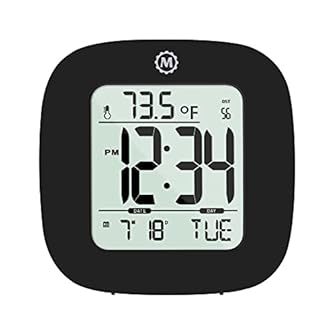

Which Case Travel Alarm Clock Should You Pick?
A case travel alarm clock should protect itself in a bag, not just be small. The useful designs fold closed, shield the display or hands, reduce accidental button presses, and keep the alarm easy to set after a long travel day.
For packing, prioritize a real folding cover or hard shell, clear button protection, common battery type, simple alarm controls, and a readable backlight or luminous dial. A small desk clock without a protective cover should not rank as a case travel clock unless it has a packable shell or verified protective design.
Side-by-Side Comparison
Case Travel Alarm Clocks
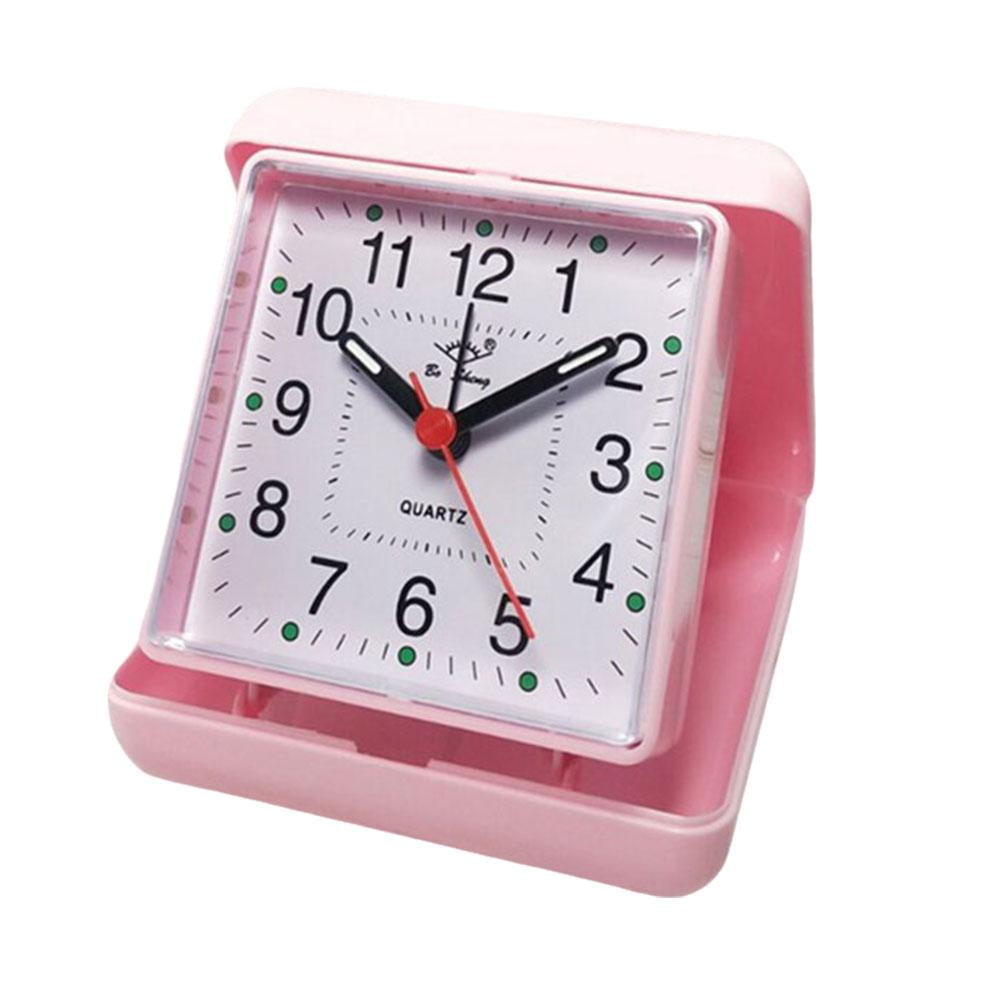

Open the full side-by-side comparisonSee the full criteria table for all top picks when you need the extra detail.Show detailsHide details
Case Design Checklist
The word "travel" is not enough. A good case travel clock protects the parts that usually fail in a bag: display, hands, buttons, and alarm switch.
| Case feature | Why it matters | Publish rule |
|---|---|---|
| Folding cover or hard shell | Protects the face and controls from suitcase pressure. | Must be visible in photos or stated in the listing. |
| Button protection | Prevents accidental alarm changes while packed. | Cards should mention whether controls are exposed or shielded. |
| Common battery | AA/AAA replacement is easier while traveling. | Specify battery type when confirmed. |
| Readable night view | Hotel rooms are dark; travelers need quick reading without a phone. | Backlight or luminous dial should be confirmed. |
| Alarm control simplicity | Travel clocks are often set when tired. | Prefer obvious switches and simple menus. |
Top Case Travel Alarm Clocks for Protected Packing
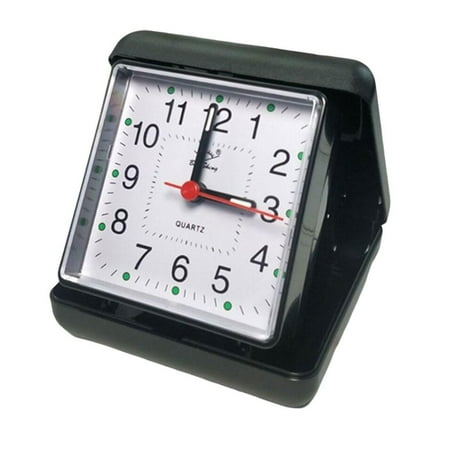
Foldable Pocket Quartz Travel Clock, Compact Battery-Powered Alarm with Folding Cover Stand, Luminous Hands for Easy Night Reading, Ideal for Backpacking, Blue
Quartz Travel Alarm Clock with Case - Holiday / Travelling
Overview
LONPUN Walmart item 13482504045 is a box-shaped PVC travel alarm sold with case wording. The saved description gives a 10-by-10-by-4-cm body, also stated as 3.90 by 3.90 by 1.56 inches.
Key Features
- An analog time display and alarm function share the square body.
- The package is listed as one alarm clock.
- Black-and-white styling and desktop placement are described.
Considerations
The text does not explain how the case opens, closes, protects the dial, or becomes a stand. “Size 5 battery” is ambiguous in a US listing, and no battery is included. The offer omits weight, movement type, alarm tone, snooze, light, luminous markers, controls, and case-latch detail. Images should be checked against the exact item before assuming a clamshell mechanism.
Also featured in: Best World Travel Alarm Clocks, Best World Time Travel Alarm Clocks, Best Thomas Travel Alarm Clocks, Best Quartz Folding Travel Alarm Clocks, Best Casio Tq140 Travel Quartz Alarm Clocks, Best Quartz Travel Alarm Clocks, Best Hito Travel Alarm Clocks, Best Battery Travel Alarm Clocks
Quartz Travel Alarm Clock with Protective Case, Compact Foldable Design for Holidays and Trips, Easy-Read Display
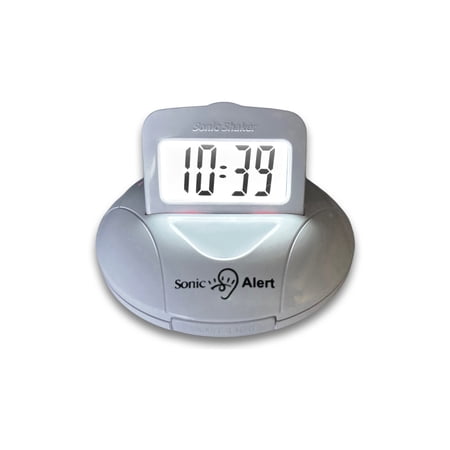
Sonic Shaker SBP200 White Compact Travel Alarm Clock – Pop-Up LCD Digital Screen – Bed Shaker Vibration – Buzz and Vibrate Modes – Rechargeable Alarm Clock
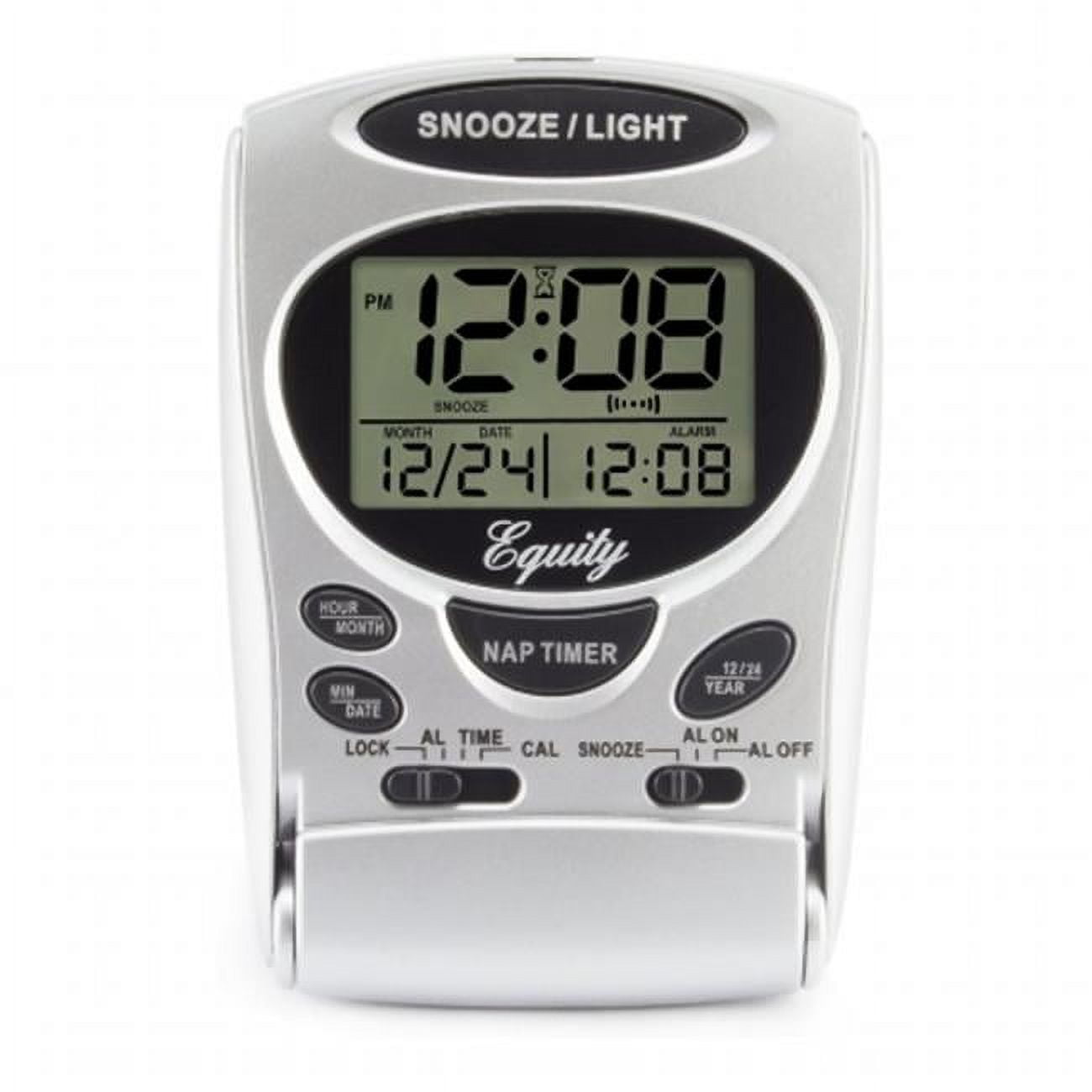
Equity 31300 Fold-up Silver Digital Travel Alarm with Nap Timer and Backlight
- Why it fits: A classic analog fold-up clock is useful for buyers who want simple controls and no bright display.
- Check before buying: Verify luminous hands or light, alarm volume, and folding case durability.
- Best for: Users who prefer analog time and simple battery operation.
- Limit: Analog alarm precision is usually less exact than digital alarms.
Also featured in: Best Folding Silver Alarm Clocks

Westclox Travelmate LCD Travel Folding Alarm Clock 5", Silver
Overview
Westclox Travelmate 47508S is the silver folding LCD option for regular packing. Structured dimensions are 3.5 inches wide by 4.5 inches high, weight is 0.2 pounds, and the plastic case closes around the digital display.
Key Features
- An on-demand backlight supports nighttime viewing.
- Snooze accompanies the alarm.
- One nonstandard button cell is listed as included.

Considerations
The product title says five inches, which does not match the saved 3.5-by-4.5-inch dimensions or 0.5-inch screen field. The source omits folded depth, alarm tone, snooze interval, backlight timeout, battery designation, replacement availability, and open stand angle. Automatic movement wording is unusual for an LCD clock and should not be read as radio or network synchronization.
- Why it fits: This is the strongest match because the folding travel design directly supports protected packing.
- Check before buying: Verify display readability, alarm volume, battery type, and whether the case stays closed in a bag.
- Best for: Travelers who want a simple digital folding clock.
- Limit: Small displays can be harder to read for some users.

BETTERLIFE Quartz Travel Alarm Clock with Case - Holiday / Travelling^ N2S1
Overview
BETTERLIFE Walmart item 14925850817 is another square PVC travel alarm with case wording. Its catalog description lists the same 10-by-10-by-4-cm and 3.90-by-3.90-by-1.56-inch dimensions as two neighboring offers.
Key Features
- The clock provides ordinary analog time and an alarm.
- A black-and-white presentation is described for desktop use.
- The package contains one clock and excludes the battery.
Considerations
The N2S1 suffix is not explained as a color, variant, or model. Saved copy does not document case closure, stand angle, movement, weight, alarm sound, snooze, light, luminous markings, or controls. “Size 5 battery” is not a clear US cell specification. Because the wording duplicates other marketplace records, verify the exact BETTERLIFE image and package rather than combining their identities.
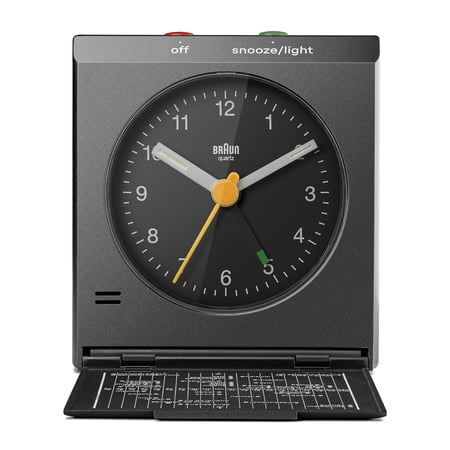
Braun Classic Analogue Travel Alarm Clock, Black, Quiet Quartz, Crescendo Alarm

LA Crosse Technology Advance Black Case Quartz Analog Clamshell Travel Alarm Clock
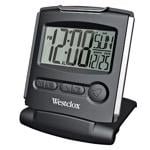
Westclox Black and Silver Fold Able Digital Travel Alarm Clock with Large LCD Display
- Why it fits: This is the strongest match because the folding travel design directly supports protected packing.
- Check before buying: Verify display readability, alarm volume, battery type, and whether the case stays closed in a bag.
- Best for: Travelers who want a simple digital folding clock.
- Limit: Small displays can be harder to read for some users.
Confirm What the Case Actually Does
Equity, Westclox, SEIKO, and the vintage Advance clock clearly describe an integrated folding case. Equity's plastic shell protects an analog dial; Westclox folds around an LCD; SEIKO's metallic case becomes a bedside stand; Advance uses a black hardshell clamshell. DESIGNICE item 20543462124 also describes a pop-up protective case, though it omits measurements.
The LONPUN, DESIGNICE 20554069748, and BETTERLIFE offers use “with case” wording but save no hinge, latch, stand, or closure details. JUSTIME supplies a separate green leather travel case around a heavy carriage clock. OQIMAX has no case at all. Confirm whether protection is integrated, removable, or merely a box-shaped housing, and inspect the closed face and exposed controls before trusting it inside luggage.
Compare Closed Size Weight and Packability
SEIKO is the smallest fully documented folding model at 2.95 by 2.91 by 0.94 inches and 1.76 ounces. Equity is 3.5 by 3.5 inches at 3.84 ounces but omits folded depth. Westclox is 3.5 by 4.5 inches at 0.2 pounds and also lacks depth. OQIMAX measures 3 by 3 by 1.5 inches, although its exposed dial requires a separate pouch.
The three template-driven Walmart box clocks each state 3.90 by 3.90 by 1.56 inches but omit weight and case mechanism. DESIGNICE's detailed clamshell and the vintage Advance offer provide neither size nor weight. JUSTIME's case is about 4.75 inches high by 3.5 inches in diameter, and the clock weighs 1.7 pounds. That makes it decorative luggage weight rather than a minimal travel alarm.
Match Alarm Light and Snooze to Overnight Use
OQIMAX combines five-minute snooze, temporary dial light, and luminous hands. DESIGNICE's documented black clamshell has an ascending alarm, snooze, light, and luminous hands but no timing details. Equity lists a loud beep and luminous markers without snooze or active light. Westclox provides on-demand LCD backlighting and snooze but omits the interval and alarm tone.
SEIKO adds ascending beep, snooze, press-on light, and luminous hands. Advance documents only an alarm switch and luminous hands. JUSTIME has an alarm switch but no light or snooze details. The three generic PVC Walmart offers say only alarm function. For a hotel room, decide whether a persistent luminous display, momentary light, backlit LCD, or no documented illumination fits the intended nighttime check.
Verify Battery Type Package and Replacement Access
OQIMAX, Equity, and Advance specify one AA battery; OQIMAX requests a carbon cell, and Equity excludes its battery. SEIKO uses one AAA, but its description says included while structured data says not included. Westclox lists an included nonstandard button cell without giving the designation, so replacement availability should be checked before travel.
LONPUN, DESIGNICE 20554069748, and BETTERLIFE exclude an ambiguously named “size 5 battery.” DESIGNICE 20543462124 says manual power despite naming quartz movement and gives no cell specification. JUSTIME says battery operated but omits the battery type. A protective case does not ensure easy battery access; inspect whether the clock must be removed from its shell and whether the door can open without stressing the hinge or stand.
Alternatives to Travel Alarm Clocks

Best Battery Powered Travel Alarm Clocks

Best Cool Travel Alarm Clocks

Best Indiglo Travel Alarm Clocks
Best Unique Travel Alarm Clocks
Analog vs Digital Case Travel Clocks
| Type | Best for | Tradeoff |
|---|---|---|
| Analog folding clock | Simple setup, classic look, low power use | Harder to read precisely in the dark unless it has a light or luminous hands |
| Digital folding clock | Large numbers, date/alarm info, backlight | More buttons and higher risk of accidental setting changes |
| Rubberized case clock | Kids, students, rougher packing | Can be bulkier than a folding travel clock |
| Mini desk clock sold as travel | Guest rooms or occasional trips | No real display protection in luggage |
Travel Use Notes
For carry-on bags, avoid exposed side buttons that can be pressed by other items. For checked luggage, protect the clock from pressure and remove loose batteries if the product manual recommends it. For rechargeable models, check current airline rules for lithium batteries before packing spares or power banks.
For hotel rooms, a short backlight is usually better than a constantly lit display. It gives you visibility without adding glare near the bed or disturbing another person in the room.