

- TIKROUND 12888 — premium pick: reliable standard shaft for most wall dials.
- TIKROUND Youngtown 12888 — high-torque long-shaft option for thick faces/heavy hands.
- SUPVOX Quartz — quiet sweep movement suited to bedrooms and study clocks.
Quick picks
Fast shortlist: movement kits by role
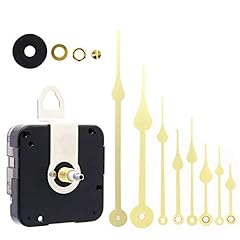


Mechanical fit Why identify the movement shaft before choosing spade hands
How shaft geometry determines hand fit
Identifying the movement’s shaft type is the essential first step because the hole diameter and profile on a spade hand must physically match the movement’s shaft geometry and its locking method. Mismatched hole shapes cause loose hands, slipping minute arms, or crushed cannon pinions — problems that no aesthetic choice can fix.
How hole shape matches shaft geometry
Clock movements present a few common shaft geometries and locking systems. Typical scenarios:
- Cannon pinion (minute) — a hollow or tapered pinion that the minute hand slides onto; often requires a snug round or tapered hole.
- Hour post / bushing — a larger-diameter post that the hour hand press-fits onto; some movements use a splined or D-shaped hour arbor for anti-rotation.
- Second arbor — a thin shaft for the seconds hand; hole must be very small and centered.
- Threaded/long-spindle — some long-shaft movements finish with a nut or cap that secures hands.
Practical checks before buying
Measure the actual hole profile and note whether the movement uses a press-fit, friction fit, or nut. If uncertainty remains, select hands that include adapters or specify interchangeable collets. For a quick anatomy refresher, consult the guide to hand mounting types and hole sizes. Test-fit with calipers or a spare shaft before final installation to avoid returns.
Use digital calipers to record outer diameter and internal hole shape; photograph the shaft from above to match splines or flats when ordering replacement hands.
Fit myths
Common fit myths, corrected
Hole profile (square, round, tapered) determines how hands seat and lock; length alone isn’t enough.
Wrong profile causes slippage, crooked hands, or stripped shafts; the movement may overwork and keep poor time.
Hole diameter fit doesn’t ensure weight compatibility; torque must match hand mass and windage.
Light movements with heavy hands can stall, skip, or wear bearings, causing intermittent timekeeping.
Length influences torque needs, but material and balance matter; well-balanced long hands may work on moderate torque.
Overestimating torque can force choosing oversized motors that won’t fit; underestimating causes strain or stalling.
The nut/washer stack and seating depth change effective spindle length; include hardware and clearance when measuring.
Incorrect measurement makes hands rub the dial or crystal, requiring rework or replacement.
Hand measurements
Quick measuring routine to produce caliper dimensions sellers need
- Gather tools and set up
Use a digital caliper (0.01 mm resolution preferred), a straight ruler, magnifier or loupe, and a small flashlight. Work on a flat surface with the movement secured so measurements are repeatable.
- Measure the shaft diameters (three points)
With the caliper jaws on the outside, record the diameters of each shaft step: the lower hour post, the middle minute pinion, and the thin seconds tube (if present). If a post is square or splined, measure across flats and note the profile.
- Measure exposed lengths and threaded sections
Measure from the movement face (where the dial sits) to the top of each shaft step to get exposed lengths. Also record any threaded collar length and the total protrusion available for hand stacking and dial thickness.
- Specify fit tolerances
State the desired fit: typical slip-fit clearance is about 0.2–0.5 mm; a snug friction fit is roughly 0–0.2 mm interference. Note if hands will be crimped or pressed—this affects preferred clearance.
- Report measurements clearly
Send three diameters with their measured tolerances, the exposed lengths, dial thickness, and movement model; include a photo with the caliper in place and reference the measure for correct hole size guidance.
If uncertain about fit, include photos and the movement part number — sellers often confirm compatibility from an image.
Fit rules How to choose hand length and when to adapt or replace parts
Shaft lengths, minute‑hand reach, and safe fixes
Start by sorting shafts into three practical categories: short/exposed post (only a few millimetres visible), standard (typical wall‑clock spindles), and long/extra‑long (for thick dials or deep frames). Match the hand hole profile first, then length.
Basic rules for minute‑hand length and clearance:
- The minute hand should approach the minute track without touching it — aim for about 1–3 mm of lateral clearance at the tip.
- Height above the dial (to clear raised numerals, glass, or a second hand) usually needs 0.5–3 mm depending on dial relief and hand stacking.
- Proportion matters: a minute hand that reaches roughly two‑thirds to almost the outer track looks balanced on most dials.
Quick fixes and when they make sense:
- Use thin metal or nylon washers/spacers under the hour hand to raise stacked hands a millimetre or two; this is safe and reversible.
- Shorten an overly long minute hand by trimming the tip if aesthetics permit; cut straight and file burrs to keep balance.
When to replace movement or hands:
- If the shaft is too short for required clearance or torque is marginal, change to a longer‑shaft or higher‑torque movement. Refer to shaft length and hole compatibility before swapping parts.
Trimming the hand’s mounting hole or the movement’s arbor is risky. Avoid altering the movement shaft or press‑fit hole — these changes often ruin fit and sealing. Prefer washers, different hands, or a swapped movement instead.
Torque check
When to choose a high‑torque movement
Long or heavy hands usually need more torque. As a rule of thumb, minute hands longer than ~150 mm (6 in) or metal-filled hands that noticeably weigh more than thin aluminium typically require a high‑torque motor; when in doubt consult which clock movement do I need.
Recognize strain early: hands that stop at large numerals, minute hand that lags after the second hand, stuttering at certain positions, or faster battery drain are classic signs the movement is underpowered.
Fit the hands, apply fresh battery and watch for one full 12‑hour cycle; gently nudge the minute hand—if the movement fails to recover smoothly or skips under load, torque is insufficient.
Tightening, rebalancing or switching to lighter hands can fix marginal issues; upgrade to a high‑torque unit when problems persist, when using very long shafts, or when mounting through thick dials that increase load.
Pre-order checklist
Exact specs and seller questions to confirm before buying
- Shaft geometry (measured in mm)
Provide the three shaft diameters (hour/minute/second) and the exposed lengths. Ask the seller to confirm tolerances in millimetres and whether the spindle is metric or imperial.
- Hole profile & mounting parts
Verify hole types (press‑fit, tapered friction, or nut/threaded) and whether adapters, hex nuts, and washers are included. Request part photos or a drawing of the pinion.
- Torque rating and hand weight
Request the movement’s torque in g·cm or a ‘high‑torque’ spec and the recommended maximum hand weight and length at a given radius.
- Shaft length vs dial thickness
Confirm total exposed shaft length, threaded portion length, and maximum dial thickness the movement will clamp securely.
- Operational details
Ask whether the sweep is continuous or step, battery type, noise level (if available), and whether hands are included or sold separately.
- Returns, warranty, and fit proof
Confirm return policy, warranty period, and request a photo of the movement assembled with similar hands or a dimensional diagram to avoid surprises.
Record answers in millimetres and grams; keep seller replies with photos for return disputes.
Great for DIY clock repairs with long hands
Premium long‑spindle movement for heavy spade hands. Tailored to makers and repairers who need a high‑torque quartz motor with an extended shaft that clears thick dials and drives large metal hands reliably.
- High‑torque STEP motor built for long, heavy hands
- Long spindle (I‑shaft) clears thick dials (2–6 mm)
- Rated to drive hands roughly 10–450 mm in length
- Complete DIY kit — straightforward installation
- May need stronger torque or longer spindle for extreme oversized hands
Solid choice when long reach and torque matter. The unit uses a STEP High‑Torque ‘I’ shaft designed to clear thick panels (2–6 mm) and reliably drive hands in the ~10–450 mm range. It suits common long‑spindle shaft installations and DIY restorations where heavier metal spade hands tend to stall lesser movements. One caveat: for exceptionally long or unusually heavy hands, confirm the movement’s torque rating and exposed spindle length before committing.
Best value option for thick panels
Budget high‑torque long‑shaft movement built for thick panels and DIY repairs. Ideal when extra exposed spindle is needed to clear deep dials; ships with spare hands and mounting hardware for an out‑of‑the‑box replacement or build.
- High torque suitable for long/heavy hands
- Long 28 mm total spindle (1‑3/32″)
- Includes extra hour/minute hands and hardware
- Strong value for money
- Mostly plastic construction may limit longevity
- Not optimal for very heavy metal hands
- Installation caution: hands can bend if over‑pressed
- May need future upgrade for extreme sizes
Quiet sweep with reliable timekeeping
Quiet-sweep movement for low‑tick environments. Ideal for bedrooms, home offices, and studios where audible ticking is distracting. Delivers a smooth, near‑silent sweep and reliable quartz timekeeping, but it usually trades some torque for silence—verify hand weight and shaft fit before swapping in spade hands. SUPVOX’s quiet‑sweep unit illustrates this balance: simple DIY install with low noise.
- Near‑silent sweep greatly reduces ticking noise
- Suits sleeping, working, and recording spaces
- Often compact and easy to install
- Accurate quartz timing for stable performance
- Typically lower torque than high‑torque movements
- Can stall or slow with long/heavy spade hands
- May need a high‑torque upgrade for large dials
Includes hands and hardware for quick install
Comprehensive kit for large clocks: a long‑spindle quartz movement bundled with multiple metal hands and mounting hardware. Ideal for DIYers repairing or making thick‑panel, oversized wall clocks who want a ready‑to‑install package.
- Cuts fit guesswork—hands matched to the movement holes
- Includes spare hands and mounting hardware for quick replacement
- Long spindle accommodates thick dials and larger hands
- Speeds up installation; wall‑mount ready out of the box
- Far fewer hand styles and finish options than buying hands separately
- Limited hand length choices for bespoke or unusual designs
- Bundled hands may not match a specific aesthetic or premium finish
- Still verify torque for very heavy or extra‑long hands
Quick take Kits remove much of the measurement and fit uncertainty, speeding repair and assembly, but they trade off the broader style and length selection available when sourcing hands separately.
Why do newly installed spade hands rub the minute or hour hand?
Rubbing usually signals poor vertical clearance, a bent hand, or incorrect washer stack. Check that hands sit parallel and that the hour hand is fully seated on its hub; small shims or a thinner washer often cures light contact.
Can the hand hole be safely enlarged to fit a larger shaft?
Yes, but only incrementally and concentric with a tapered reamer or fine file to avoid ovalizing the hole. Metal holes tolerate careful reaming; thin plated or decorative hands risk damage, so replacement hands are often safer for cosmetic pieces.
Are shaft adaptors available to convert between shaft profiles?
Commercial friction-fit bushes and plastic/metal adapters exist for common ‘I’, tube, and tapered shafts and can bridge small mismatches. They work best for light hands; heavy or long hands still benefit from a true matching high‑torque movement.
What fixes prevent hands from slipping on the shaft?
Confirm the correct sleeve/washer/nut sequence and tighten the minute-hand nut evenly—use the original friction washer or a new steel washer if needed. Persistent slip usually means stripped hub or low torque; replacement movement is more reliable than adhesive fixes.
When is swapping the movement the only reliable solution?
Replace the movement when shaft length, profile, or torque cannot be matched with shims or adapters, or when bearings are worn. Choosing a long‑spindle, high‑torque unit typically resolves fit and performance failures for oversized spade hands.
- Re-measure critical dimensions
Repeat caliper checks of exposed shaft length, the three shaft diameters, and dial thickness; record hand‑hole clearance targets and hand weights to confirm torque needs.
- Photograph the assembly
Take close front and side photos with a ruler showing the shaft profile, washers, and any threads so the seller can verify hole fit and shaft type.
- Contact the seller with specifics
Send measurements, photos, desired hand style/length, and ask about torque, included adapters, and return policy so any fit issues are addressed upfront.
- Plan a low‑risk test fit
Prepare a cheap or mock hand to check clearance and rotation immediately on arrival; keep basic tools and spare washers or bushings ready.
- Final confirmations before ordering
Confirm lead time, replacement parts availability, and whether the unit supports an adapter if the hole or shaft differs slightly.


Takeaway
Final recommendations and quick actions
- Premium long‑spindle for heavy hands.
- Budget high‑torque as value upgrade.
- Kits simplify matching hands/hardware.
Top recommendations: TIKROUND 12888 — premium long‑spindle, suited to long dials and heavy spade hands; TIKROUND Youngtown 12888 — budget high‑torque option for similar use; TIKROUND Include Hands 12888 — comprehensive kit when matching hands and hardware is preferred; SUPVOX Quartz — quiet‑sweep choice (confirm torque before heavy hands); 2Pcs Quartz Clock Mechanism Kit — two‑unit pack for dual projects or backups.
Prioritized actions:
Measure shaft diameters and exposed length. Choose a movement with sufficient torque for hand weight. Match hand length and clearance to the spindle. Prefer kits if unsure about hole profiles. Verify seller specs, returns, and spare‑part availability.Mechanical fit first, then style.