
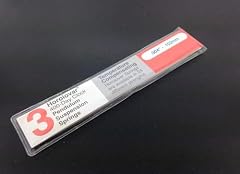
- Schatz 49 Suspension Springs Pack for 400-Day — commonly compatible with many German movements; good starting match.
- Horolovar 400-Day Suspension Wire Pack .0032 — thicker wire for heavier pendulums or stiffer blocks.
- Horolovar 400-Day Suspension Wire Pack .0023 — finer wire for delicate pendulums and lighter suspension slots.
Quick picks
Fast pack recommendations

Mechanical basics Torsion, geometry, and what to watch for
How the suspension spring sets the clock’s period
A 400‑day uses a slender vertical suspension spring as a torsion element: when the pendulum rotates, the spring produces a restoring torque proportional to angle (τ = –kθ). For circular wire the stiffness k follows k = G·J / L, with J (polar moment) ≈ πd^4/32. The movement’s period is T = 2π·√(I/k), so in practice stiffness scales with diameter^4 and inversely with length. That gives the rule of thumb: small changes in thickness shift period far more than comparable length changes — roughly T ∝ √L / d^2.
Common failure modes and visible running symptoms
- Broken or kinked spring: Pendulum stops immediately or runs intermittently. A direct spring swap is usually curative.
- Necking, corrosion, or frayed wire: Reduced amplitude and erratic timekeeping; replacement typically restores stable swing.
- Permanent set or shortened spring: Clock runs consistently fast (shorter effective length); swapping to correct length/diameter helps.
- Bent hooks, flattened ends, or damaged suspension block: Rubbing, uneven beat, or noisy operation; a new spring may not be enough — the block or tube often needs repair.
- Anchor/pendulum rubbing, dirty escapement, or pivot wear: Irregular ticks and progressive loss of amplitude; these usually require movement service rather than just a spring change.
Inspect under magnification for breaks, kinks, corrosion.
Measure wire diameter and free length before ordering replacements.
Gently displace the pendulum: if it won’t sustain a steady amplitude the spring is suspect.
If no visible defect and problems persist, suspect escapement, pivots, or suspension block wear.
Measurement routine
Step-by-step measurement and photo checklist
- Prepare tools and workspace
Use a digital caliper or micrometer, a metric/mm ruler, a bright lamp, a macro-capable phone camera, a marker and small labeled containers. Work over a tray to catch small parts.
- Photograph the whole assembly
Place the complete suspension against a ruler and photograph the full length from both sides; include the clock movement or model plate in the frame for reference. For deeper guidance, see the measure before ordering replacement springs page.
- Measure wire diameter and length
Measure wire diameter with a micrometer at two points and record the average in mm (or thousandths of an inch). Measure free length and the effective suspension length (anchor point to pendulum hook) and note units used.
- Document lug and hook types
Take close-ups of the top lug and the lower hook/clip. Note whether the lug is a screw lug, slot lug, soldered lug or spring-clip, and whether the hook is V-shaped, looped, ball-ended or split.
- Record condition and label files
Note kinks, corrosion, repairs, or previous solder. Save photos with a filename that includes movement model and each measurement; keep parts in labeled containers.
Safety: Wear eye protection and work over a tray; thin suspension wire can snap and produce sharp ends. Use soft-jaw pliers and avoid nicking the spring with hardened tools. Do not heat or reshape the spring unless trained.
Common ordering mistakes:
Selecting the wrong wire diameter or confusing mm/inch units. Ordering incorrect hook/lug style (clip vs. screw lug is common). Buying bare wire when a pre-formed suspension is required. Relying on length alone—diameter and hook form set period and fit.When in doubt, supply clear photos and precise measurements rather than relying on vague descriptions.
Schatz 49 pack
Restorer-friendly Schatz 49 replacement springs
Temperature compensating springs for Schatz 49 clocks
A three-piece kit of Horolovar temperature-compensating suspension springs made to the ‘Schatz 49′ standard. Suits hobby restorers and professional horologists working on common German 400‑day movements that use the circular ’49’ marking; intended as a go-to replacement when an original spring is lost or broken.
- Temperature-compensating design reduces rate changes with temperature
- Wide range of strengths (24 options) increases likelihood of a match
- Sized for Schatz 49 and commonly fits Wurthner/Herr standard 53 movements
- Three-piece pack provides immediate spares for testing and tuning
- Taps common, established sizes used in many German anniversary clocks
- May not fit very fine-gauge or nonstandard hook mounts
- Rare or bespoke movements often require custom gauges or hand-formed springs
- Pack options still might miss an exact required strength — measurement needed
- Does not address escapement, block, or suspension post damage
For most German anniversary clocks using the Schatz/Wurthner/Herr standard, the Schatz 49 three-pack is a practical first step: its temperature‑compensating springs and broad strength selection let repairers trial and tune without waiting for custom fabrication. Measure thickness and hook style before ordering; very fine gauges or unusual mounts can still require bespoke springs or professional adjustment.
Stiffer alternative
Horolovar .0032" — a firmer runner‑up
New USA batch, three wires
A purposefully stiffer Horolovar suspension wire for 400‑day pendulums, sold as a three‑piece pack. Suits movements that need lower sensitivity to disturbance or slightly higher restoring torque—good for heavier or externally exposed pendulums where a thinner wire oscillates too wildly.
- Adds restoring torque for heavy or draft‑prone pendulums
- Reduces sensitivity to small disturbances and breeze
- Robust enough for frequent handling or display use
- Increases natural frequency — clock tends to run faster
- Harder to bend and seat cleanly without special tools
- Can increase stress on pallets and pivots if over‑stiff
Horolovar .0032″ is a technical choice rather than a default replacement. Its greater stiffness (remember stiffness scales with wire diameter to the fourth power) shortens the pendulum period, so expect the movement to gain and require pendulum or regulator adjustment. Fit carefully—avoid kinks, ensure correct hooks, and run multi‑day tests to settle rate and beat because the thicker wire changes amplitude and pallet loading.
Horolovar .0023" fine gauge
Finer‑Gauge Replacement for Delicate Movements
- Very low stiffness, preserves original period
- Ideal for lightweight brass/glass pendulums
- Three‑piece pack provides spares
- Matches Horolovar fine‑gauge spec
- Extremely fragile; kinks are permanent
- Needs precision fitting and re‑regulation
- Unsuitable for heavy or coarse pendulums
The .0023″ Horolovar-style wire offers the best match for featherweight 400‑day pendulums and historically sensitive restorations. Handling is critical: bends and kinks cannot be undone, so fittings should use magnification, dedicated jigs, and very gentle manipulation. For heavier pendulums or quick repairs, a thicker wire reduces breakage and eases fitting.
Repair alternatives
Common myths vs. realistic outcomes
Re‑tempering can adjust temper slightly but rarely returns an old spring to factory resilience.
Heat cycles risk microscopic damage and uneven temper; re‑tempering is only a short‑term fix for marginal rate issues, not for kinks, corrosion, or fatigue fractures.
Donor springs sometimes fit but often differ in thickness, hook geometry, and effective length.
Even small stiffness differences change the period dramatically and can mask underlying escapement or pivot wear; donors are best as temporary or diagnostic parts.
A professional overhaul addresses worn pivots, escapement geometry, and suspension alignment that a simple clean won’t.
If wear, bent arbors, or damaged pallets are present, a pro‑level overhaul restores mechanical integrity but requires expertise and time.
Quartz conversion provides stable timekeeping and low maintenance; reversible kits exist and can be chosen sensitively.
Conversion is prudent when parts are unobtainable, the movement is extensively worn, or the owner prioritizes reliability over original mechanics.
When conversion is the sensible choice:
Movement has irreparable wear, missing parts, or repeated failure after repair. Owner values reliability and low maintenance over mechanical originality. Repair quotes approach or exceed the clock’s restored value.When to pick a pro overhaul:
Visible pivot, escapement, or suspension-seat wear; desire to preserve original function.For step‑by‑step conversion and repair decision guidance, see the deeper conversion/repair guide: convert or repair 400‑day mechanisms.

Decision flow
Swap or call a clockmaker?
- Measurement comes first: thickness, hook style, and visible movement wear determine feasibility.
- A suspension swap is appropriate for isolated spring faults; movement damage or unclear measurements require pro service.
- Recommended packs (Schatz 49; Horolovar .0032; Horolovar .0023) cover most common needs but each alters stiffness and rate.
If measured spring thickness and hook style match a known replacement and the movement shows only a spring fault, a suspension swap is reasonable; if arbor damage, bent pivots, damaged teeth, corrosion, or an irregular tick are present, contact a clockmaker. Consult the linked higher‑level movement guidance before attempting any movement‑level intervention.
Checklist
Five immediate steps
- 1. Measure precisely
Use a micrometer to record wire diameter, length, and hook style; note movement model if present.
- 2. Photo and document
Photograph front, back, and hook detail; record pendulum mass and visible wear.
- 3. Compare to recommended packs
Match measurements to likely fits (Schatz 49, Horolovar .0032, or .0023) and expect rate changes with gauge swaps.
- Test-fit on the bench
Mount the replacement off the clock or with the movement out of the case; ensure free, centered swing.
- 5. Re‑regulate and monitor
Run for 24–72 hours; if the rate won’t stabilize or irregular ticking appears, stop and consult a professional.
For valuable, historic, or complex movements, prefer professional servicing.