Side-by-Side Comparison
Iron Vintage Clocks



Open the full side-by-side comparisonSee the full criteria table for all top picks when you need the extra detail.Show detailsHide details
Top 10 Of The Best Iron Vintage Clocks

Retro Rust Wall Clock 20th Century 8" Non Ticking Large Iron Antique Hanging Clocks Double Sided Vintage...
Overview
For wall mounting, Retro Rust Wall Clock 20th Century 8" Non combines a double-sided rotating station wall clock format with two clock faces and 360-degree rotation. The maximum outline 20 inches high x 12 inches wide; 7.5-inch dial case or finish includes iron and metal and bronze-and-rust finish.
Key Features
- The complete hanging outline reaches 20 inches high by 12 inches wide around a 7.5-inch dial.
- Two analog faces rotate through 360 degrees in an iron-and-metal bronze-and-rust station-clock frame.
- Battery evidence conflicts: the description requires two AA cells while the structured field lists one; neither includes batteries.
Considerations
Confirm the actual AA count and bracket projection, then use wall hardware rated for the double-sided rotating metal assembly.
Also featured in: Best Adeco Antique Round Iron Wall Clocks, Best Rustic Iron Wall Clocks, Best Large Antique Iron Wall Clocks, Best Antique Iron Large Wall Clocks, Best Vintage Inspired Round Double Sided Wall Hanging Clocks, Best Adeco Retro Iron Wall Clocks, Best Adeco Antique Iron Double Wall Clocks

Maxspace Classic Vintage Clock - Elegant and Decorative Analog Clock,Silent Non-Ticking Clocks with...
Overview
For tabletop use placement, the Maxspace Classic Vintage Clock Maxspace lily-design analog alarm clock includes alarm and silent quartz timekeeping. The case measures conflicted structured measurements: 1.18 x 5.2 inches and a separate 19.5 cm screen value and uses metal construction or finish.
Key Features
- The pink-red lily-design tabletop clock uses a metal case, Arabic numerals and an analog quartz movement.
- One non-included AA carbon battery powers both timekeeping and the stated alarm function.
- The source gives incompatible 1.18 x 5.2-inch and 19.5 cm measurements, so complete case size is unresolved.
Considerations
Obtain verified width, height and depth and confirm alarm controls; the conflicting measurements cannot establish shelf fit.

Farmhouse Wall Clock, 17H×13.4D Inch, Wrought Iron Frame with Warm Gray Finish, Vintage Wall Clock Silent...
Overview
For wall mounting, JUMBO DECOR Farmhouse Wall Clock combines a farmhouse wall clock format with silent quartz timekeeping. The 17 inches high x 13.4 inches wide x 1.77 inches deep case or finish includes wood panel and metal frame.
Key Features
- The complete wall-clock case measures 17 x 13.4 x 1.77 inches, including the previously omitted depth.
- A wood panel and metal frame carry the warm-gray farmhouse finish and large Arabic numerals.
- Silent quartz timekeeping requires one AA battery, which is not included.
Considerations
Reserve the full 1.77-inch projection and confirm hanger location and wall anchor compatibility before choosing the installation height.
Also featured in: Best Adeco Retro Iron Wall Clocks, Best Metal Scroll Wall Clocks, Best White Wrought Iron Wall Clocks, Best Geneva Wrought Wall Clocks, Best Wrought Iron Gallery Wall Clocks, Best Retro Decorative Iron Wall Clocks, Best Antique Iron Large Wall Clocks, Best Wrought Iron Scroll Wall Clocks, Best Driven Iron Wall Clocks, Best Bai Jumbo Wall Clocks, Best Large Retro Wall Clocks

Wrought Iron Antique-Look Brown Round Wall Hanging Double Sided Two Faces Retro Station Clock Round...
Overview
Wrought Iron Antique-Look Brown Round Wall Hanging Double provides two clock faces and 360-degree rotation in a double-sided rotating station wall clock made for wall mounting. It measures 14 x 11 inches overall, 8-inch dial, 3-inch thickness, with wrought iron used for the case or finish.
Key Features
- The wrought-iron clock measures 14 x 11 inches overall, with an 8-inch dial and 3-inch thickness.
- Two analog faces rotate through 360 degrees for viewing from either side of a wall bracket.
- Silent quartz operation requires two AA batteries, and the batteries are not included.
Considerations
Before purchase, allow the full three-inch case thickness and 360-degree rotation clearance, then match the scroll bracket to anchors suitable for the mounting surface.

Vintage Farmhouse Table Clock with Bird Topper, Silent Non-Ticking Mantel Clock with Closable Back Cover,...
Overview
As a bird-topper farmhouse mantel clock for mantel, shelf or desktop placement, MODE HOME Vintage Farmhouse Table Clock with Bird includes silent quartz timekeeping and adjustable tilt. The 7.1 inch wide x 7.7 inches high x 2.5 inches deep format combines with black iron frame construction or finish.
Key Features
- The black iron bird-topper case measures 7.1 x 7.7 x 2.5 inches on a tabletop stand.
- The clock body tilts within its frame to improve viewing from a mantel, shelf or desk.
- A closable rear panel conceals the battery compartment and movement while helping protect them from dust.

Considerations
Allow the full 2.5-inch depth plus tilt clearance, and confirm the unspecified battery size before selecting a narrow shelf.

Vintage Iron Wall Clock for Living Room, Decorative Antique Design with Silent Quartz Movement, Large...
Overview
For wall mounting through oversized rear hanging hole, amusediy Vintage Iron Wall Clock for Living Room combines an ornate iron wall clock format with silent quartz timekeeping. The 21 inches high x 15 inches wide; depth not stated case or finish includes iron and antique-bronze finish.
Key Features
- The 21-inch-high by 15-inch-wide clock uses solid iron scrollwork with an antique-bronze finish.
- A silent quartz movement provides analog timekeeping without the constant ticking described by the seller.
- An oversized rear hanging hole establishes wall support and is intended to simplify stable installation.

Considerations
Confirm case depth, weight, battery requirement and an anchor that fits the oversized hanging hole before mounting the iron clock.

Vintage Wall Clocks Living Room,Decorative Antique French-Style | Large 21" x 15" Digital Retro Silent Wall...
Overview
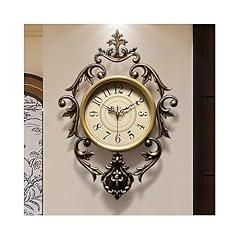
For wall mounting, HEBOIX Vintage Wall Clocks Living Room combines a wall clock format with seller-described quiet timekeeping. The 15"W x 21"H case or finish includes Metal and Gold/Brown.
Key Features
- For Wall Mount, the wall clock has a 15"W x 21"H case described with Metal and Gold/Brown.
- The movement for the Metal and Gold/Brown wall clock is quartz movement, seller-described quiet or non-ticking operation, and continuous-sweep movement.
- The wall clock intended for Wall Mount provides Battery Powered, one AA battery required, with the required batteries not included.
Considerations
The Metal and Gold/Brown case measures 15"W x 21"H, but its depth still needs confirmation before installation.

24 Inch Vintage Iron Metal Wall Clock, French Elegant Retro Decor, Large Farmhouse Wall Clock, Silent...
Overview
MODE HOME 24 Inch Vintage Iron Metal Wall uses seller-described quiet timekeeping in its wall clock format for wall mounting. Its Iron, Metal and Black and Gold - 24 Inches construction or finish accompanies the 24"W x 24"H format.
Key Features
- The Iron, Metal and Black and Gold - 24 Inches version measures 24"W x 24"H and uses Wall Mount.
- The unspecified-material model at Wall Mount provides quartz timekeeping and seller-reported quiet movement. Within the unspecified-material case, the wall clock provides Battery Powered, one AA battery required, with the required batteries not included.
- At Wall Mount, the wall clock combines 24 Inches Analog display and Black dial.

Considerations
Verify depth, cable or battery access and control clearance for the wall clock, because 24"W x 24"H covers only width and height.

Bernhard Products Extra Large Wall Clock 20 Inch Decorative Wrought Iron, Silent Quartz Industrial Gears...
Overview
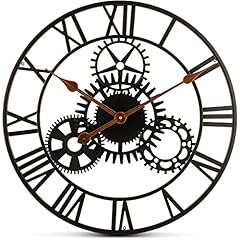
Bernhard Products Extra Large Wall Clock 20 Inch is a 20-inch open-face wrought-iron wall clock for wall mounting on a screw or hook, with silent quartz timekeeping and stationary decorative gears. Its wrought iron and distressed bronze detailing case or finish measures 20 inches in diameter.
Key Features
- The 20-inch open-face clock uses wrought iron, Roman numerals and distressed bronze-colored hands and detailing.
- Layered center gears are decorative and remain stationary; the case does not have a rotating bracket.
- One non-included AA battery powers silent quartz movement, and mounting uses a screw or hook not supplied.
Considerations
Choose an appropriate screw or hook and confirm the unlisted wall projection before placing the open-face metal clock over furniture.

Muellery Vintage Double Sided Wall Clock Iron Metal London Kensington Station Wall Clock Art Clock...
Overview
The Muellery Vintage Double Sided Wall Clock Iron Metal wall clock provides double side for wall mounting and an exterior location described by the seller. Its physical format is 8.46 x 9.06 x 3.15 inches with Iron, Metal and Multicolor construction or finish.
Key Features
- 8.46 x 9.06 x 3.15 inches wall clock with an Iron, Metal and Multicolor case for Wall Mount and an exterior location described by the seller.
- The European-style wall clock has a double-sided, double-faced display for reading the time from either direction.
- The wall clock at the planned location uses Analog display. The Iron, Metal and Multicolor wall clock pairs its power with batteries required for normal use and not included.

Considerations
Hold the order for Muellery Vintage Double Sided Wall Clock Iron Metal until you check dial or display readability, operating controls, included parts and current return terms.
Also featured in: Best Retro Decorative Iron Wall Clocks
What is the clock actually made from?
The refreshed options state iron, wrought iron, metal or a metal frame. Keep material separate from distressed, French or industrial styling.
Use the explicit construction claim: iron, wrought iron, metal frame or another stated metal. Distressed French, farmhouse and industrial names describe appearance, not composition or age. A genuine material choice affects weight, corrosion and cleaning, while a vintage look alone cannot justify an antique premium or provenance discussion for every new clock. Resolve iron or metal construction together with wall/table/double-sided format on the chosen model before ruling on physical fit.
How large and heavy is the complete format?
Small double-sided and mantel designs coexist with larger wall clocks. Brackets, two faces and decorative frames add clearance beyond the dial.
Small double-sided and mantel clocks need side or base clearance; large wall clocks need anchors and viewing distance. A projecting bracket adds depth beyond dial diameter, and two faces add weight. Measure the complete frame, bracket and rotation envelope for that format instead of applying a generic wall or bedside footprint to the whole page. Daily ownership depends on matching wall/table/double-sided format to the specific size and weight requirement of that clock.
Will the movement and dial suit the room?
Several listings use seller-described silent quartz movement. Check numeral and hand contrast, second-hand motion and readable distance instead of relying on case size.
Seller-described silent quartz movement should be checked only on models that make that claim. Also compare hand-to-dial contrast, second-hand motion and legibility from the intended angle. A double-sided clock must remain readable from both approaches, while a mantel clock should be judged from its normal seated or standing sightline. Let size and weight and mounting decide whether this function belongs on the final shortlist.
What mounting and finish details need confirmation?
Verify rear hanger or side bracket, supplied fastener, wall substrate, battery access, loaded weight, rust or weather limits, exact finish and package protection.
For wall models, verify rear hanger or side bracket, hole spacing, included fasteners and battery access. For tabletop models, check base stability and shelf depth. Ask whether the finish has any outdoor exposure limit and inspect package protection for bent metalwork; an iron or metal label alone does not establish weather resistance. Complete the purchase check by testing mounting against style versus age for the selected model.
Alternatives to Iron Vintage Clocks

Best Maple’S Metal Table Clocks