Side-by-Side Comparison
Seiko Pendulum Wall Clocks


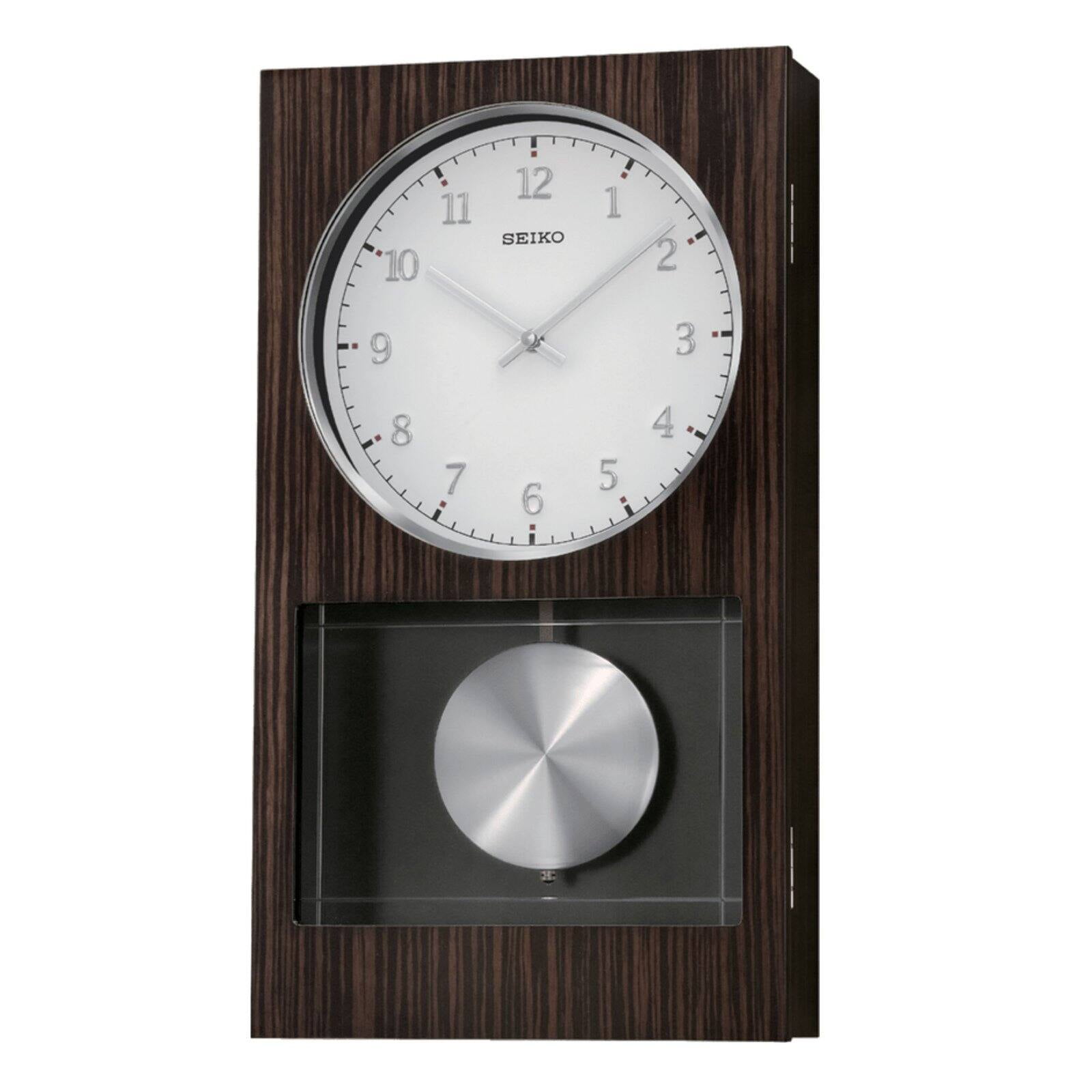
Open the full side-by-side comparisonSee the full criteria table for all top picks when you need the extra detail.Show detailsHide details
Top 10 Of The Best Seiko Pendulum Wall Clocks

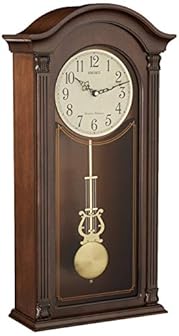
Seiko Regal Oak Wall Clock with Pendulum
Overview
Seiko QXH107BLH uses a carved oak case, gold-tone columns, analog quartz dial, pendulum, quarter-hour chimes, hourly strikes, adjustable volume, and nighttime silence.
Key Features
- Overall dimensions are 28.25 inches high, 11.75 inches wide, and 3.75 inches deep.
- One C battery is included for the movement and sound functions.
- Automatic night silencing allows daytime chimes without continuous overnight reporting.
Considerations
The source does not state the exact quiet hours, finished weight, rear hanger, or selectable chime melodies. Confirm those points and leave enough vertical clearance for the full 28.25-inch case before purchase.



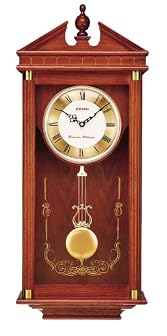
Seiko Mahogany Wall Clock with Pendulum
Overview
Seiko QXH118BLH combines a brown arched wooden case, analog quartz display, metal pendulum, dual chime choices, quarter-hour music, hourly strikes, and night-sound control.
Key Features
- The described case measures 27 by 11.75 by 5.25 inches.
- An included C battery operates the clock, pendulum, and electronic sound functions.
- Automatic silence and adjustable volume help manage frequent quarter-hour sequences.
Considerations
A structured field instead reports 31 inches by 7 inches, creating a significant fit conflict. Verify the real case envelope, 10.2-pound weight, chime selections, mute hours, hanger, and included battery before ordering.

SEIKO QXM607BRHZ 45 Melodies in Motion Wall Clock with Rotating Pendulum
Overview
Seiko QXM607BRHZ is a motion clock whose face splits and rotates on the hour while a rotating pendulum, lights, and one of 45 melodies animate the display.
Key Features
- The clock measures 17.5 inches high, 16 inches wide, and 3.75 inches deep.
- The library contains 15 classical, 10 holiday, and 20 crystal-bell melodies.
- A light sensor stops lights and music in darkness, while volume remains adjustable.
Considerations
Four included C batteries supply the mechanism. Confirm the 22 decorative crystals, tune-selection method, sensor threshold, moving-panel clearance, finished weight, and wall mount before ordering; this is a motion-and-music clock rather than a traditional hanging regulator.
Seiko QXH046BLH Pendulum Wall Clock, Brown
Overview
Seiko QXH046BLH is a brown analog pendulum wall clock with raised numerals, Westminster and Whittington options, quarter-hour sequences, hourly sound, volume, and night silence.
Key Features
- This Seiko pendulum wall clock has an 18.5-inch height, 10.5-inch width, and 3.25-inch depth.
- One included C battery powers its quartz movement and electronic chime system.
- Three-dimensional numerals improve dial definition while the pendulum supplies visible motion.
Considerations
Confirm the exact nighttime silence schedule, whether either melody can be selected independently, and the finished weight and hanger before buying. Frequent quarter-hour sound can be intrusive if volume control alone is insufficient.
Also featured in: Best Westminster Pendulum Wall Clocks, Best Westminster Chime Wall Clocks, Best Seiko Schoolhouse Pendulum Wall Clocks, Best Seiko Solid Wood Pendulum Wall Clocks, Best Seiko Oak Wall Clocks, Best Seiko Mission Pendulum Wall Clocks, Best Seiko Dark Brown Pendulum Wall Clocks, Best Seiko Brown Pendulum Wall Clocks, Best Chronograph Wall Clocks

Seiko Gold Tone & Arched Wall Clock with Pendulum and Dual Chimes
Overview
Seiko QXH066BLH is an arched wood analog wall clock with ornate metal pendulum, dual chimes, quarter-hour sequences, hourly strikes, automatic silencing, and volume control.
Key Features
- The primary dimensions are 24.5 inches high, 12.25 inches wide, and 5 inches deep.
- One C battery powers the quartz chime clock and is described as included.
- Volume adjustment and an automatic chime silencer provide control over its regular sound schedule.

Considerations
Secondary fields conflict by listing 25-inch and 28-inch sizes and marking the battery not included. Confirm the package label, exact dimensions, weight, included cell, and silent-period timing before purchase.
Also featured in: Best Seiko Dark Brown Pendulum Wall Clocks, Best Howard Miller Dual Chime Clocks
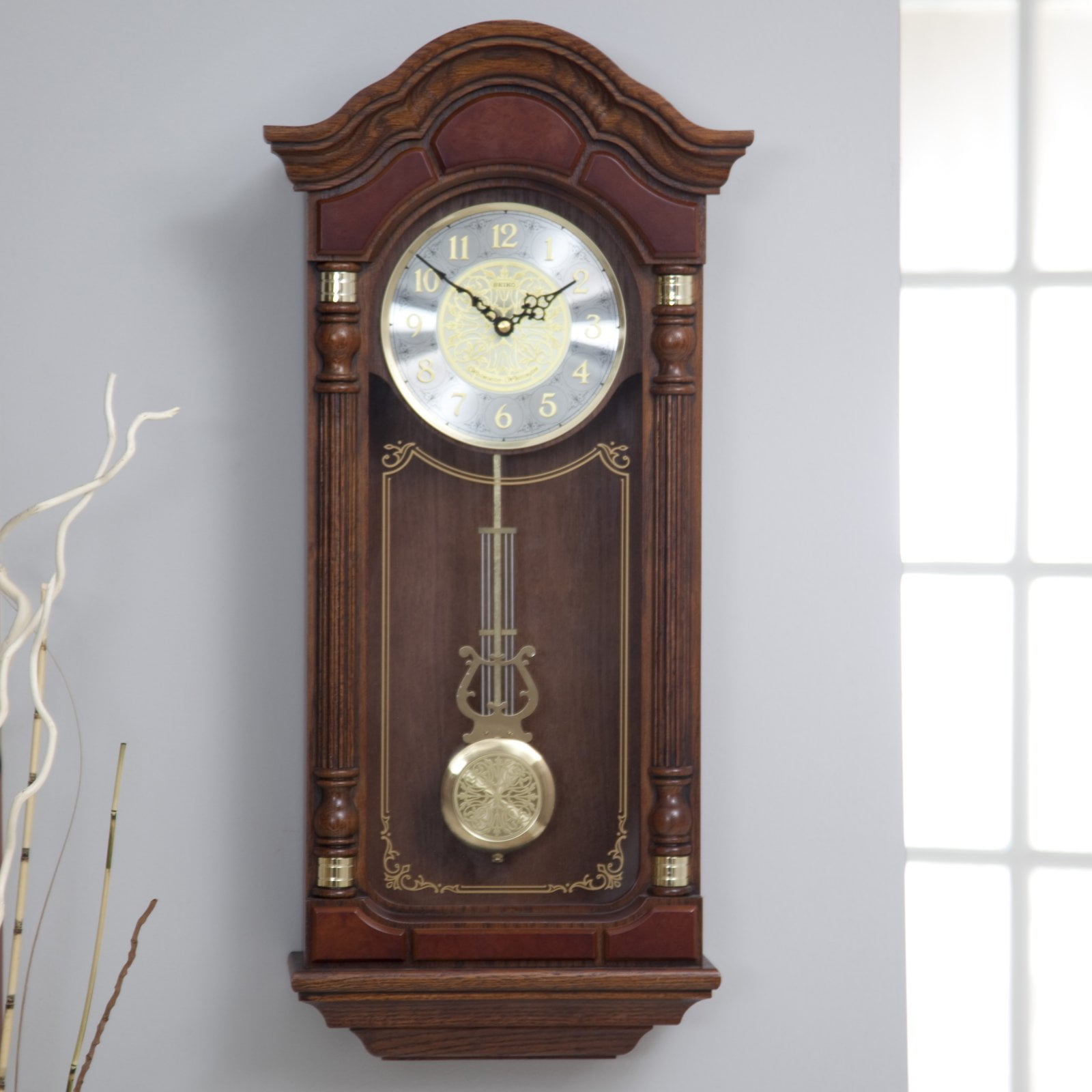
Seiko Stately Dark Brown Solid Oak Case Wall Clock with Pendulum and Chime 28" x 12.5" x 6", QXH004BLH
Overview
Seiko QXH004BLH is a dark-brown solid-oak analog wall clock with hand-rubbed finish, vine-pattern metal pendulum and dial, Westminster or Whittington chimes, and gold accents.
Key Features
- The dark brown wall-clock case is identified as 28 by 12.5 by 6 inches.
- Chimes sound every quarter hour and the clock strikes each hour.
- Automatic night shutoff and adjustable volume manage the electronic sound program.
Considerations
The seller description does not state battery type, count, inclusion, quiet-period hours, finished weight, or hanger. Confirm those operational and installation details before buying this specific retailer version of QXH004BLH.

SEIKO QXM617KLH Westminster Chime /18 Melodies Pendulum Wall Clock, Black
Overview
Seiko QXM617KLH is a black steampunk-style motion wall clock with faux gears, Roman numerals, rotating pendulum, Westminster option, 18 melodies, volume control, and night sensor.
Key Features
- The square case measures 17.7 by 17.7 inches and is 3.3 inches deep.
- Hourly motion uses opening and closing sequences around the selected melody or Westminster chime.
- Four included C batteries power the clock behind its crystal-glass front.

Considerations
A light sensor disables melodies in darkness, but its threshold and any manual mute are not stated. Confirm tune selection, moving-part clearance, weight, hanger, and whether Westminster replaces or joins the 18-song rotation before buying.
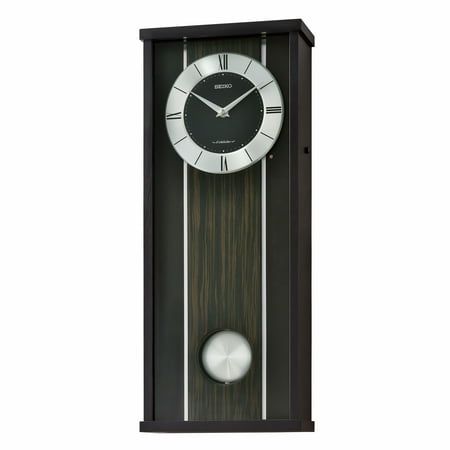
Seiko QXM396KLH Classic Modern Pendulum Clock, Black
Also featured in: Best Old Seiko Alarm Clocks
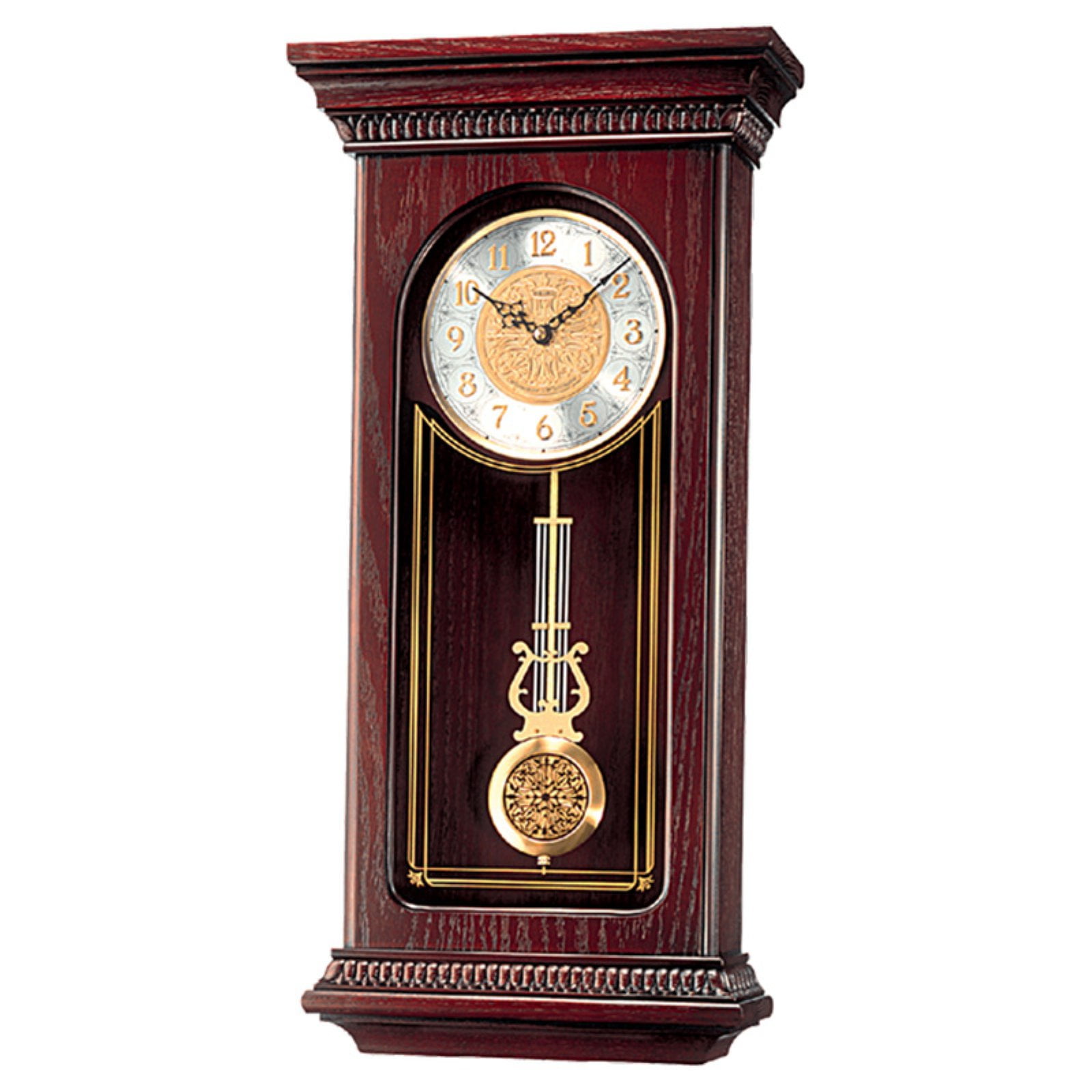
Seiko Hourly Dual Chime 12 in. Pendulum Wall Clock Quartz Analog Traditional Wooden QXH008BLH
Overview
Seiko QXH008BLH is a traditional oak analog pendulum clock with Westminster and Whittington choices, quarter-hour sequences, hourly strikes, volume adjustment, and nighttime silence.
Key Features
- The complete case measures 25 inches high, 12 inches wide, and 5 inches deep.
- One C battery is included for quartz timekeeping and electronic sound.
- Solid wooden construction gives the 12-inch-wide clock a traditional wall-clock profile.
Considerations
The title's 12-inch label describes width, not total height. Confirm exact mute hours, finished weight, rear hanger, melody selector, and package contents before purchase, particularly for a wall near bedrooms or workspaces.
Also featured in: Best Seiko Schoolhouse Pendulum Wall Clocks, Best Seiko Solid Wood Pendulum Wall Clocks, Best Seiko Oak Wall Clocks, Best Seiko Oak Pendulum Wall Clocks, Best Seiko Mahogany Pendulum Wall Clocks, Best Seiko Brown Pendulum Wall Clocks, Best Quartz Chime Pendulum Wall Clocks, Best Dual Chime Mantle Clocks
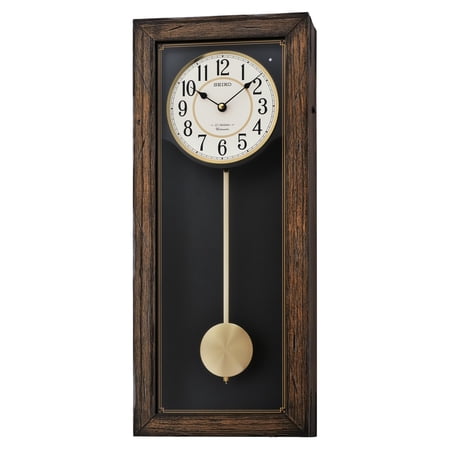
Seiko Musical Pendulum Wall Clock, Dark Brown, Transitional, Quartz, Analog, QXM330BLH
Which Seiko pendulum format fits the available wall?
Traditional arched and regulator cases are tall and narrow: QXH046 is 18.5 by 10.5 inches, QXH008 is 25 by 12 inches, and QXH107 reaches 28.25 inches. QXM motion clocks are broader, around 16 to 17.7 inches wide, because the face or decorative panels rotate. Depth ranges from 3.25 inches on QXH046 to 6 inches on QXH004. Check finished weight, wall fastener, pendulum drop, panel movement, and access to volume or chime switches. Resolve QXH066 and QXH118 dimension conflicts before measuring, and keep moving-clock faces clear of shelves or trim.
What batteries and setup steps do the sound functions require?
Most traditional chime clocks use one C battery, commonly described as included. QXM607 uses four included C cells. QXM617 also uses four C batteries, while QXM612 appears to require four C cells plus one AA, likely separating musical and rotating functions; its structured field omits the AA. Verify every compartment against the model manual. Hang the case level, attach or release the pendulum, set the hands according to chime instructions, select Westminster, Whittington, or melodies, then set volume and nighttime control. Advance time only as the manual permits so electronic strike counts remain aligned with the displayed hour.
Which chime schedule or motion feature may be unsuitable?
QXH models can chime every quarter hour and strike hourly, which is much more frequent than QXM motion clocks that animate on the hour. Volume control does not replace a verified mute schedule. Traditional models use automatic night silence; QXM612, QXM607, and QXM617 rely on light sensors, so a brightly lit room may affect quiet behavior. QXM612 offers 30 melodies, QXM607 offers 45, and QXM617 combines 18 melodies with a Westminster choice. Exclude motion clocks where rotating panels are distracting, and reject a regulator when quarter-hour sound remains intrusive even at its lowest setting.
What should be confirmed for the exact Seiko model?
Match model number, finish, dimensions, depth, weight, battery count, battery inclusion, chime choices, tune library, volume range, and night-control method. Request rear photographs showing hanger, battery doors, selector switches, pendulum connection, and any moving-panel locks. Resolve QXH066's 24.5-, 25-, and 28-inch entries and QXH118's 27-versus-31-inch conflict. Confirm QXM612's extra AA cell and QXH004's small width difference. Ask for exact mute hours or light-sensor behavior rather than assuming all Seiko clocks share one schedule. The wall fastener must be selected from the verified finished weight and wall material.
Alternatives to Seiko Oak Wall Clocks

Best Seiko Schoolhouse Pendulum Wall Clocks

Best Seiko Oak Wall Clocks

Best Seiko Brown Pendulum Wall Clocks
Best Seiko Dark Brown Pendulum Wall Clocks