Side-by-Side Comparison
Sharp Atomic Clocks



Open the full side-by-side comparisonSee the full criteria table for all top picks when you need the extra detail.Show detailsHide details
Top 10 Of The Best Sharp Atomic Clocks

Sharp Atomic Digital Alarm Clock, Battery Operated Self-Setting Digital Wall or Desk Clock, Easy to Read...
Overview
Sharp model SPC5028AMZ is a black 6.45-by-5-inch LCD atomic alarm clock with calendar, weekday, indoor-temperature, and switchable nightlight displays. Its plastic case can hang on a wall or use the built-in stand; saved weight is 0.31 kilograms.
Key Features
- A WWVB receiver performs daily time updates.
- Three excluded AAA batteries power the clock.
- The nightlight has an on-off switch.
Considerations
Still, radio synchronization depends on reception at the site and may require positioning or manual setup. The one-second accuracy statement is seller wording tied to successful updates, not a local test. No depth, temperature tolerance, viewing angle, nightlight runtime, alarm volume, snooze interval, signal behavior, warranty, or origin is stored. Confirm time zones, daylight-saving control, 12/24-hour format, battery life, display contrast, package contents, and returns.

Sharp Atomic Clock - Never Needs Setting! - Jumbo 3" Easy to Read Numbers - Indoor/Outdoor Temperature...
Overview
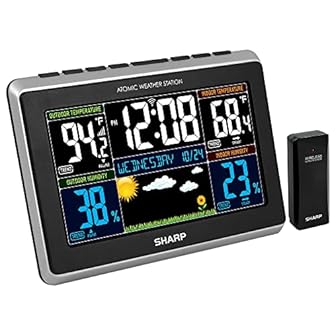
This gloss-black Sharp atomic clock has an 8.75-by-7.9-inch plastic case, jumbo three-inch LCD time digits, calendar, weekday, and indoor/outdoor temperature. It works on a wall or integrated stand and includes a separate wireless outdoor sensor rated to 100 feet.
Key Features
- The main unit uses three excluded AA batteries.
- The sensor uses two excluded AAA batteries.
- A WWVB receiver performs daily updates.
Considerations
Still, the 100-foot figure is a seller maximum; walls, metal, and interference can reduce it. No depth, sensor model, channel count, temperature tolerance, transmission interval, weather rating, signal indicator, backlight, alarm, warranty, or battery life is documented. Confirm time zones, daylight-saving setting, manual fallback, sensor placement, outdoor enclosure, pairing, wall fastener, stand stability, package contents, and returns.
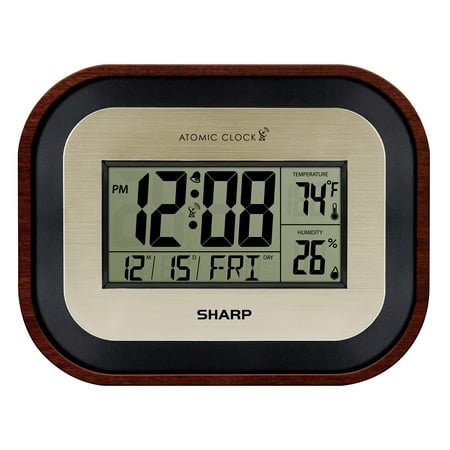
Sharp Digital Wall Clock, Self-Setting Atomic Desk Clock Woodgrain Finish
Overview
Sharp SPC1019CEAMZ is a digital atomic wall or desk clock with bronze woodgrain finish and gold-bronze accents. Its LCD shows 1.65-inch time digits, indoor temperature, humidity, month, date, and weekday, while an integrated stand supports tabletop use.
Key Features
- Two excluded AA batteries are required.
- A WWVB receiver performs daily synchronization.
- The display includes indoor humidity.
Considerations
Yet woodgrain describes the finish; the source does not identify a wood case. The within-one-second statement depends on reception and is not an independent measurement. Dimensions, weight, material, humidity or temperature tolerance, viewing angle, backlight, alarm, signal indicator, time zones, battery life, warranty, and origin are absent. Confirm the model, footprint, finish, manual fallback, daylight-saving behavior, calibration limits, wall hanger, stand, battery access, price, package contents, and returns.

SHARP Digital Alarm with AccuSet - Automatic Smart Clock, Never Needs Setting - Great for Seniors, Kids,...
Overview
This black Sharp AccuSet alarm clock uses a red LED display in a 5.5-by-2.6-inch oval plastic case. It weighs about 10.22 ounces, plugs into an electrical source, and arrives with preprogrammed time plus selectable time-zone and daylight-saving controls.
Key Features
- A high-low dimmer adjusts the display.
- An included CR2032 cell backs up settings.
- The backup compartment is screw secured.
Considerations
Actually, the source does not describe a WWVB receiver. AccuSet means preprogrammed time; the user selects a zone and DST switch, so this is an automatic-set alternative rather than a verified atomic clock. The CR2032 field is mislabeled. No digit size, alarm volume, cord length, backup alarm behavior, warranty, or origin is stored. Confirm the adapter, default Eastern setting, DST use, alarm controls, and returns.

Sharp Desktop Dual Alarm Clock with Color Display - Atomic Accuracy - Calendar & Day of Week Time/Date Display
Overview
This silver Sharp desktop clock combines a color digital display, WWVB atomic synchronization, calendar, weekday, and two alarms. The 6.14-by-5.1-inch plastic case is tabletop-mounted, weighs 16 ounces, and uses corded power with an optional battery backup.
Key Features
- Two excluded AAA cells provide backup.
- A top control combines snooze and dimming.
- The display relights after atomic setup completes.

Considerations
Still, backup mode retains settings and permits the alarm but leaves the display dark. The screen also goes dark while searching for the atomic signal. No depth, adapter specification, cable length, brightness levels, alarm volume, snooze duration, zones, signal indicator, battery runtime, warranty, or manual behavior is stored. Confirm alarm schedules, outlet placement, display intensity, reception, daylight-saving control, package contents, and returns.
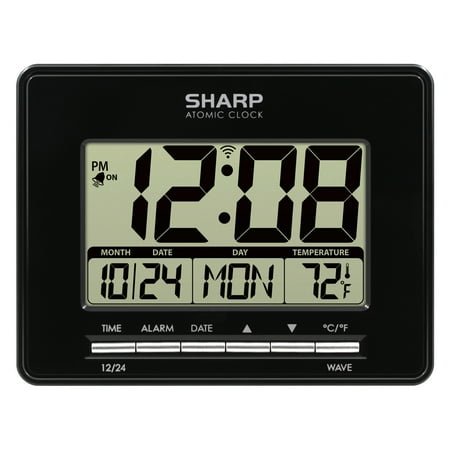
SHARP Digital Atomic Clock, Atomic Accuracy, Date, Temperature, Black Case, LCD Display
Overview
This black Sharp digital atomic alarm clock displays time, date, weekday, and indoor temperature on an LCD. A rear hang hole supports wall use, while a pull-out kickstand supports a nightstand or desk; the top snooze button activates a five-second backlight.
Key Features
- A WWVB receiver performs automatic synchronization.
- The backlight activates when the alarm sounds.
- A calendar and indoor-temperature display are included.
Considerations
Still, the Walmart description omits model, dimensions, weight, material, battery requirements, temperature tolerance, time zones, daylight-saving controls, signal indicator, manual fallback, alarm volume, snooze interval, viewing angle, warranty, and origin. The one-second statement assumes successful WWVB reception. Confirm size, batteries, backlight behavior, display contrast, radio coverage, rear hanger and fastener, kickstand stability, alarm controls, sensor limits, current price, package contents, and returns.
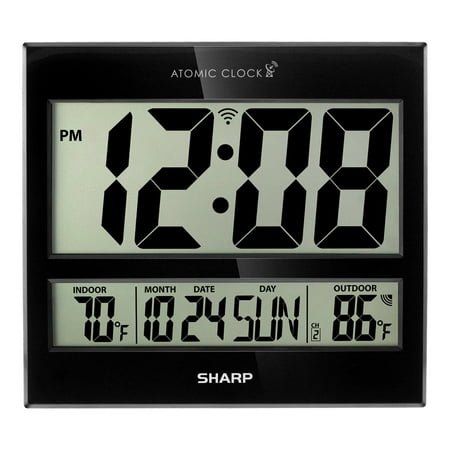
Sharp Atomic Clock Jumbo 3" LED Display In/ Out Temp Calendar Color Black Classic Decor Style
Overview
This gloss-black Sharp atomic clock has an 8.75-by-7.9-inch plastic case, jumbo three-inch LCD time digits, calendar, weekday, and indoor/outdoor temperature. It works on a wall or integrated stand and includes a separate wireless outdoor sensor rated to 100 feet.
Key Features
- The main unit uses three excluded AA batteries.
- The sensor uses two excluded AAA batteries.
- A WWVB receiver performs daily updates.
Considerations
Still, the 100-foot figure is a seller maximum; walls, metal, and interference can reduce it. No depth, sensor model, channel count, temperature tolerance, transmission interval, weather rating, signal indicator, backlight, alarm, warranty, or battery life is documented. Confirm time zones, daylight-saving setting, manual fallback, sensor placement, outdoor enclosure, pairing, wall fastener, stand stability, package contents, and returns.
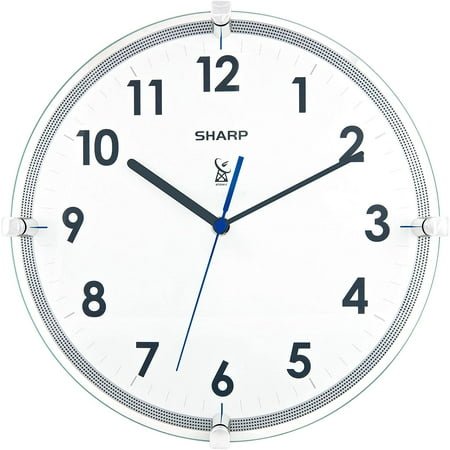
Sharp Atomic Analog Wall Clock – 10.5” Suspended Glass Face - Sets & Updates Automatically
Overview
This Sharp analog atomic wall clock has a 10.5-inch format, suspended glass lens, and large numerals. Its built-in radio receiver is described as updating hour, minute, and second while applying selected time-zone and daylight-saving settings.
Key Features
- One AA battery powers the clock.
- The time can set from a radio signal.
- Daylight-saving adjustment is described as automatic.
Considerations
Yet the source gives no model, depth, weight, frame material, dial color, hand contrast, battery inclusion, movement sound, signal indicator, zones, manual fallback, warranty, or origin. Its description names the United States atomic source as Boulder, while other saved WWVB records say Fort Collins; verify the manual. Confirm reception, glass reflections, numeral visibility, hanger, fastener capacity, battery access, daylight-saving override, current price, package contents, and returns.
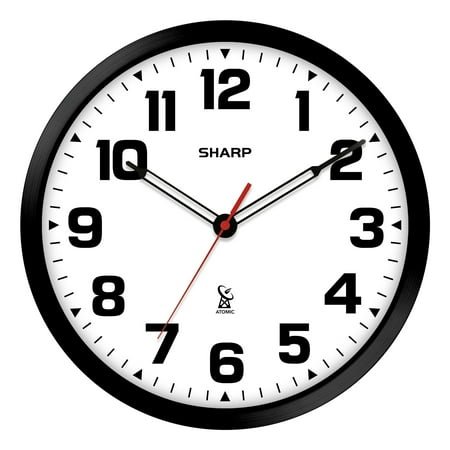
Sharp Atomic Wall Clock 12" Matte Black Automatically Sets Battery Operated Modern Design AQ Analog
Overview
This Sharp analog atomic wall clock uses a 12-inch matte-black design with a plastic frame, glass cover, and large numerals. The seller describes automatic radio-based setting for a chosen time zone and automatic daylight-saving changes.
Key Features
- One AA battery is required.
- The glass-covered dial is wall mounted.
- The listing describes self-setting operation.
Considerations
Still, the saved Walmart record does not provide a model number, depth, weight, battery inclusion, update frequency, signal indicator, supported time zones, manual-set fallback, movement sound, warranty, or origin. Automatic daylight-saving behavior may require a correct switch or zone selection and successful reception. Confirm the rear controls, radio coverage at the wall, DST override, glass reflections, dial contrast, hanger type, fastener load, battery-door clearance, current price, package contents, and return eligibility before installation.

WallarGe Atomic Clock with Outdoor and Indoor Temperature - 12.5 Inch Self-Setting Digital Clock Large...
Overview
WallarGe's 12.5-inch digital atomic clock is a non-Sharp alternative with 2.5-inch time digits, indoor and wireless outdoor temperature, calendar, weekday, alarm, and wall-or-desk use. Its separate outdoor sensor is described for placement within 100 feet.
Key Features
- Clock and sensor use excluded batteries.
- Four continental-US time zones are selectable.
- Both 12/24-hour and Celsius/Fahrenheit modes are listed.

Considerations
Yet battery sizes and counts, dimensions, weight, material, sensor channel, temperature tolerance, transmission interval, outdoor rating, signal indicator, backlight, alarm volume, warranty, and origin are absent. The 100-foot range and one-second accuracy are seller claims, not measurements. Confirm manual fallback, daylight-saving override, WWVB reception, sensor protection and pairing, display contrast, stand, wall hanger, battery life, price, package contents, and returns. This does not meet a Sharp-only requirement.
Separate Sharp Atomic Models from the Two Alternatives
Eight records combine the Sharp brand with explicit radio-controlled or atomic wording: SPC5028AMZ, the jumbo three-inch sensor model, SPC1019CEAMZ, the color dual-alarm clock, two 12-inch analog clocks, the 10.5-inch analog clock, and the black LCD alarm with indoor temperature. These are the direct matches for a Sharp atomic-clock search.
Two cards need a relevance note. Sharp AccuSet is genuinely Sharp but its saved source describes preprogrammed time, a zone selector, and a DST switch without a WWVB receiver. WallarGe includes atomic synchronization and an outdoor sensor but is not a Sharp product. Choose the first only if radio updates are unnecessary; consider the second only if brand flexibility is acceptable. Confirm model and receiver wording in the delivered manual.
Check WWVB Reception Time Zones and Daylight-Saving Controls
The radio-controlled records say they receive WWVB updates associated with NIST. Successful synchronization depends on location, building materials, interference, antenna orientation, and setup time. A seller's within-one-second statement assumes a received update and does not describe holdover accuracy between signals. Some records name Fort Collins, while two Walmart analog descriptions instead mention Boulder; use the product manual for the actual radio standard and procedure.
Time-zone and daylight-saving details are uneven. WallarGe explicitly lists Pacific, Mountain, Central, and Eastern settings plus auto DST. Sharp AccuSet defaults to Eastern and uses manual zone and DST switches. Other Sharp records refer to a desired time zone or automatic DST without listing zones or override behavior. Confirm zone coverage, DST on/off control, manual setting, signal indicator, overnight search behavior, and what happens after battery replacement or a failed sync.
Compare Analog Dials Digital Displays Alarms and Sensors
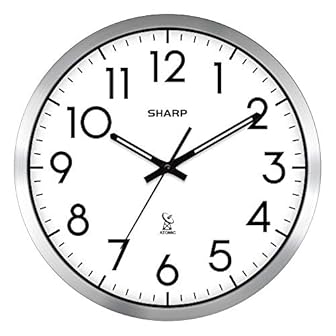
The analog choices are the 10.5-inch suspended-glass clock and two 12-inch clocks. One 12-inch version has matte black plastic and glass; the other uses a gray dial, white numerals, black hour and minute hands, blue sweep second hand, and silver finish. Their sources omit depth, weight, and movement-sound evidence, so inspect dial contrast and reflections as well as diameter.
Digital options divide by function. SPC5028AMZ adds indoor temperature, calendar, alarm, and nightlight. SPC1019CEAMZ adds humidity. The jumbo Sharp and WallarGe add wireless outdoor sensors. The color Sharp supplies dual alarms, dimming, and corded illumination; the black Walmart Sharp provides a five-second backlight. Sensor range, tolerance, update interval, alarm volume, snooze timing, and viewing angle are generally missing, so treat these as comparison questions rather than measured results.
Map Power Requirements Mounting and Installation Space
Battery needs vary sharply. SPC5028AMZ takes three AAA cells. The jumbo Sharp uses three AA cells in the clock plus two AAA cells in its sensor. SPC1019CEAMZ takes two AA cells. Each analog wall clock states one AA. WallarGe says both clock and sensor are battery powered but omits sizes and counts. The black Walmart digital Sharp does not document its batteries.
The color dual-alarm Sharp and AccuSet use wall power. The color model accepts two AAA backup cells; AccuSet includes a CR2032 settings battery. For installation, confirm outlet and cable placement, backup behavior, sensor weather exposure, rear battery clearance, wall hanger geometry, fastener capacity, stand footprint, and display sightline. Known dimensions range from 5.5 by 2.6 inches for AccuSet to 12.5 inches for WallarGe, but several Walmart records omit full depth and weight.
Alternatives to Sharp Wall Clocks
Best Sharp Wall Clocks
Best Sharp Quartz Wall Clocks

Best Sharp Round Wall Clocks
Best Sharp Suspended Glass Wall Clocks